
Local bat numbers soar thanks to Graven Hill’s conservation success
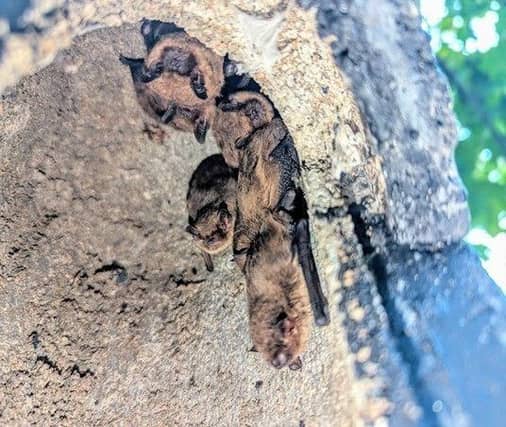

Graven Hill’s pioneering bat mitigation and conservation initiative is celebrating a huge boost this year, with its local bat roosting population almost doubling in size in just 12 months across the development.
When redevelopment plans began for the former MOD site in Bicester back in 2015, an ecological study carried out by Waterman Infrastructure & Environment revealed roosts for protected pipistrelle and long-eared species of bats within buildings due for demolition. This discovery meant that the Graven Hill scheme needed a European Protected Species Licence from Natural England before any development could proceed. The licence required extensive mitigation measures to safeguard the bats - including the creation of new roosts, wider environmental enhancements, and continuous population monitoring.
The mitigation strategy was designed to address any effects the phased development may have on these bat species by incorporating a variety of measures to encourage the bats to adopt new habitats. This included the installation of 45 new bat boxes in 2021, placed strategically across Graven Hill.
Waterman ecologists, responsible for devising and monitoring the success of the initiative over the last decade, are delighted with the findings of this year’s bat censor which revealed a thriving community:
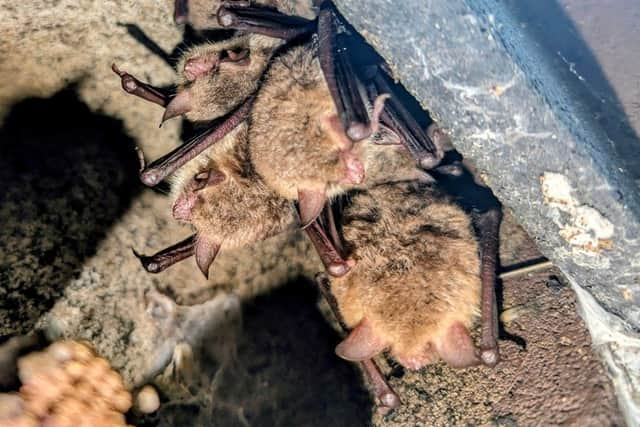
- In 2024 - eight active roosts were discovered, including 15 common pipistrelle Pipistrellus pipistrellus and one natterer’s Myotis nattereri bat.
- In 2025 - results showed even stronger numbers with 11 roosts supporting 14 common pipistrelle, 3 soprano pipistrelle Pipistrellus pygmaeus, 10 natterer’s bats, and 4 brown long-eared Plecotus auritus bats.
- Bat droppings were also found in several other boxes, and Waterman predict even further growth in roost occupancy for 2026 and beyond.
Gemma Davis, Customer Experience Director at Graven Hill Village Development Company (GHVDC), said: “We’re incredibly proud of the positive environmental impact we’re achieving at Graven Hill. The bat project is a fantastic example of how thoughtful planning, ecological expertise, and community awareness can deliver lasting benefits. Our residents and neighbours can be confident that protecting biodiversity remains central to everything we do as the development continues to grow.”
Simon Dowell, Principal Ecologist at Waterman, added: “It’s wonderful to see so many bat boxes being colonised. Most bat species are crevices dwellers, so it’s essential to design and position roosts that suit their natural habits.
“Our monitoring shows that bats, once dependent on the old MOD buildings are now thriving in new habitats among Graven Hill’s newly-planted trees and woodlands. Protecting these areas long-term will be key to sustaining this growing bat population and everyone is delighted with the success of the project so far.”
The bat boxes at Graven Hill come in various shapes and sizes to replicate natural roosting conditions. They’re carefully positioned to avoid areas of lighting and residential disturbance while still allowing local wildlife enthusiasts to enjoy seeing bats at dusk. Waterman also use cutting-edge monitoring tools to gauge bat welfare and plan for future enhancements to support population growth.
Findings from historic survey work carried out by Waterman, found the Graven Hill development currently supports over half the UK’s native bat species, including the rare barbastelle Barbastella barbastellus bat, underscoring its status as a pioneering nature-friendly housing project.
Bat Facts:
- Bats are the only mammals capable of flight. They have wings made of a stretchy skin membrane, allowing them to fly and manoeuvre through the air.
- There are over 1,400 species of bats worldwide and the UK is home to 18 species.
- Bats use echolocation to navigate and hunt, sending out high-pitched sounds to "see" their surroundings.
- Bats play a crucial role in pollination by feeding on fruits, which helps disperse seeds and support various plant species.
- Bats are found in almost every habitat on Earth, except for polar regions and extreme deserts.