
Rachel Taylor - MP for North Warwickshire and Bedworth: Why I fought for the law to say all hate is equal
In 1999, London was rocked by a series of horrific bombings. Three explosions – one in Brixton, one in Brick Lane, and one at the Admiral Duncan pub in Soho – killed three people and injured over 140.
The perpetrator was a neo-Nazi terrorist whose targets were chillingly specific: Black Londoners, the Bengali community, and LGBT people. His violence was driven by hatred – hatred of race, culture, identity, and love.
That vile act of terror was a reminder that hatred wears many faces. It can be racial, religious, homophobic, transphobic, or ableist. But its impact is always the same: fear, trauma, and division.
Yet our laws don’t currently treat all hate as the same. At the moment, hate crimes based on race or religion are treated more seriously in the law – as “aggravated” offences – with tougher sentencing powers. But hate crimes targeting someone for being gay, transgender, or disabled are not. That cannot be right.
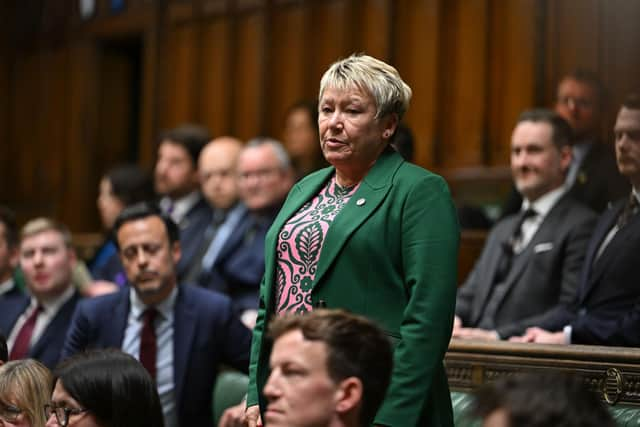

That’s why I introduced an amendment to the Crime and Policing Bill to fix this unjust discrepancy. My amendment brought hate crimes based on sexual orientation, transgender identity, and disability into line with those already treated as “aggravated offences.” This is not a radical overhaul; it’s a necessary correction. The Law Commission has long recommended it. It ensures justice is not conditional on who you are.
This cause is deeply personal to me. I came of age during the era of Section 28—the cruel, homophobic law that stigmatised LGBT people and silenced our existence. It was more than a law; it was an assault on our right to live openly and honestly. I got into politics to fight Section 28 and everything that law stood for.
Sadly, that battle isn’t over. Across the world and here at home, we’re seeing a resurgence of that same poisonous politics: one that tells people they’re second-class citizens because of how they live, who they are, or whom they love.
Between 2023 and 2024, there were more than 22,000 hate crimes committed against people based on their sexual orientation. Over 4,000 were committed against transgender people. And over 11,000 targeted disabled people.
These are not just numbers. Behind every one of those statistics is a real person, whose scars may heal on the outside but who may never recover from the fear and trauma they have suffered.
Yet the justice system is failing them. Of those 11,000 disability hate crimes, just 320 resulted in prosecution. For the 22,000 homophobic hate crimes, only 3,118. And for transphobic hate crimes? A mere 137 prosecutions.
We must fight back against this hatred. We must show that we are not content to stick with the status quo.
Take the case of a deaf and partially sighted woman who was attacked in the street by a man who dragged her along the pavement, screaming that he hated disabled people. Three years later, she’s still too afraid to leave her house. Her attacker got just 12 weeks in jail. Is that justice?
Or Cassie, a disabled student, pushed down a road in her wheelchair by two drunk men making sexual comments. Or the lesbian couple beaten up on a London bus. Or the transgender woman attacked in a park by far-right extremists.
And many victims don’t even report what’s happened to them. Fewer than one in ten LGBT people report hate crimes. As many as 70% of disability hate crimes go unreported. Victims simply do not believe they will get justice.
That’s why reform is needed, and why I was so pleased to gather 104 signatures from cross-party MPs in support of my amendment for change. That sent a message to the government that this change is sorely needed. I’m delighted that they have listened to our call and have now committed to equalising hate crime laws in the next few months, through an amendment in the House of Lords. That’s a big step forward for equality.
When Labour was last in government, we made huge strides toward equal rights. We introduced the Equality Act. We repealed Section 28. We brought in the very hate crime laws I now seek to complete.
But in recent years, progress has stalled. The UK has dropped to 22nd place in Europe on LGBT rights – we used to be first. Hate is on the rise. Pride flags are being pulled down at County Halls. Some politicians are even questioning whether certain disabilities are real.
Hatred is hatred. The law must reflect that. I am proud to have secured the backing of our Labour government to deliver this vital change for gay, transgender, and disabled people. Very soon, we will have hate crime laws that show that no matter who you are, Britain is a country that will not tolerate hate.