
Sir Jeremy Wright MP gets the latest evidence behind early cancer detection for Kenilworth and Southam residents
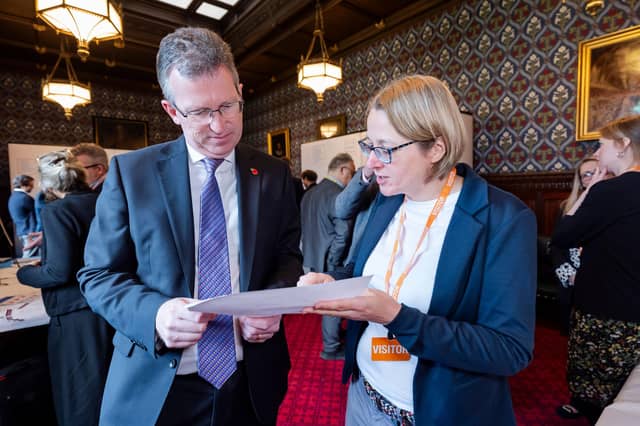

Sir Jeremy Wright, MP for Kenilworth and Southam met leading researchers from Warwick Screening in Parliament to get up to speed on why more early cancer detection isn’t always better and the trade-off of benefits and harms. Sir Jeremy also got the latest data and insights on how virtual wards in the NHS can improve patient care from the National Institute for Health and Care Research (NIHR).
Sir Jeremy Wright, MP for Kenilworth and Southam said: “Good policy depends on good evidence. Evidence Week is an invaluable opportunity to hear directly from researchers about the science behind the issues that affect people in Kenilworth and Southam. The insights from Warwick Screening on cancer detection and from NIHR on virtual wards will help ensure that decisions in Parliament are grounded in what works, not just what sounds appealing.”
Westminster’s annual Evidence Week in Parliament brings together the public, researchers and MPs to discuss how evidence is used and scrutinised at Westminster. It is organised by the campaigning charity Sense about Science in partnership with community groups including Mumsnet, MoneySavingExpert, Shout Out UK, and research institutions across the UK.
Tracey Brown, director of Sense about Science said: “Politicians don’t need to be scientists, but to be effective politicians in a world of major challenges, radical innovation and data, they clearly need to know science. They need to be ready to evaluate evidence critically, and as broadly as data on free school meals to methods for carbon capture.
Researchers are stepping forward to help meet that challenge over Evidence Week in Parliament, and it is good news for Kenilworth and Southam residents that Sir Jeremy made time in their busy schedule to get briefed on national and local issues.”
Evidence Week brings together MPs and leading scientists to get the latest insights on pressing issues, covering topics as varied as health, environment and net zero, cost of living, children’s wellbeing, and AI and innovation. It opened on 3 November with a ‘reverse’ committee hearing in Parliament, where voters from across the country got to question seven chairs of parliamentary Select Committees about the evidence behind legislation that affects them.
The week also includes training sessions for parliamentary staff to better handle research evidence and data, provided by Smart Data Research UK, OSR, House of Commons Library, Full Fact, ONS and Ipsos. Now in its 8th year, Evidence Week was launched in response to the public’s interest in policy evidence, with community groups and individuals wanting to know the justification for everything from rules on standing at football matches to which green technologies are subsidised. It builds on established research and information work in Parliament by POST and the Commons and Lords Libraries to support greater use of evidence by parliamentarians. Since then, it has been emulated in other Parliaments including the EU.