
Warwickshire vets warns pet owners of grass seed danger
A Warwickshire veterinary practice is urging dog owners to check their pets following walks after seeing a rise in the number of problems caused by grass seeds. Shipston Veterinary Centre has issued a warning about the potential dangers of grass seeds after seeing a higher than usual number of affected dogs admitted to its surgery in West Street, Shipston-on-Stour.
Grass seeds can become imbedded in paws, ears, eyes, armpits, the tail, the groin or other areas of skin, and may cause painful wounds and infections. The sharp point of the seeds can pierce the skin and migrate through the body or, if inhaled into the mouth or nose, can lodge in the lungs, leading to serious infections that may be life-threatening.
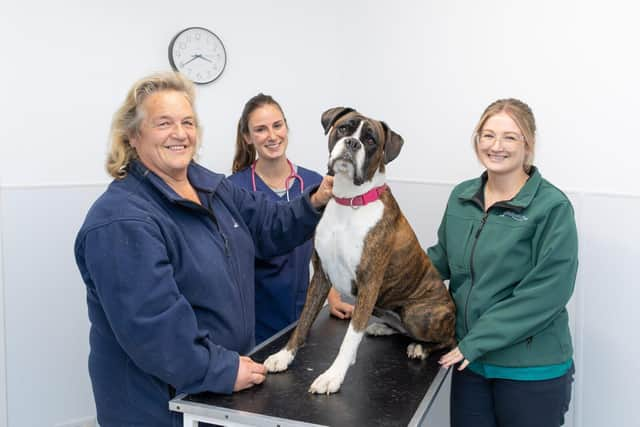
The latest case saw six-year-old Boxer Georgie needing treatment after a grass seed she inhaled became lodged inside her nose, causing the pet discomfort.
Signs a pet is affected by grass seeds include:-

- Sneezing or rubbing the nose
- Hair matting
- Irritation and swelling
- Blood or discharge from a small wound
- Excessive or unusual licking, scratching and rubbing the head and eyes
- Headshaking,
- Limping or nibbling at paws
- Discharge from the eyes or nose
Vet Becky Westmore from Shipston Veterinary Centre, said: “It’s a really good idea to check and groom your dog if they have been walked in areas with long grass and remove any seeds that you find. Cats are also at risk and it’s a good idea to check them daily, especially if they might explore areas where there is long grass.
“If you are concerned your pet may have an embedded grass seed, you should contact your vet. It’s particularly important to seek veterinary advice if you suspect there is a grass seed in their eye, in case the surface of the eye has been scratched, which could lead to an ulcer forming.”
Becky said when Georgie was brought into the practice she had a runny nose and was sneezing a lot, and her left eye was closed.
She said: “I used an endoscope, which is a long flexible tube with a camera at one end, to take a look inside Georgie’s nose and find out what was causing the problem. The inside of the nose is quite complicated to navigate because it has lots of folds – just like a chocolate Flake – but I was able to locate the seed.
“The seed was quite firmly embedded inside Georgie’s nose, but I was able to reach and grasp it using a grabbing tool fixed to the end of the endoscope. Once it was removed, Georgie was soon back to her normal self.”
Georgie’s owner, Sandra Rollins, believes her pet inhaled the grass seed when being walked on farmland, where she sniffed the ground after catching the scent of a pheasant.
Mrs Rollins said: “When we got home Georgie began sneezing and rubbing her nose and at first I thought she had inhaled some dust. She started sneezing again the following morning so I took her to Shipston Vets.
“The vet practice was brilliant with Georgie and their vet Becky managed to remove the grass seed. Georgie was back to normal in no time. I hadn’t realised grass seeds could cause such problems and I’ll try and keep Georgie out of the long grass in future.”
All types of dog can be affected by grass seeds, but be extra vigilant with breeds that have feathery toes and long floppy ears, such as spaniels.