
Wellesbourne man completes “most gruelling” Mount Kilimanjaro trek
A man from Warwickshire has returned from the summit of Mount Kilimanjaro, describing it as “easily the toughest and most emotionally gruelling thing I’ve ever done” while raising £2,500 for sight loss research.
A man from Warwickshire has returned from the summit of Mount Kilimanjaro, describing it as “easily the toughest and most emotionally gruelling thing I’ve ever done” while raising £2,500 for sight loss research.
Kevin McKeown, 65, hiked Africa’s highest mountain for a little over a week in October, having seen the benefits of research into macular disease – the biggest cause of sight loss in the UK.
Kevin, from Wellesbourne, who has been treated for his own eye disease in the past, has raised the money for national charity the Macular Society, which funds vital research for macular disease. There is currently no cure for macular disease.
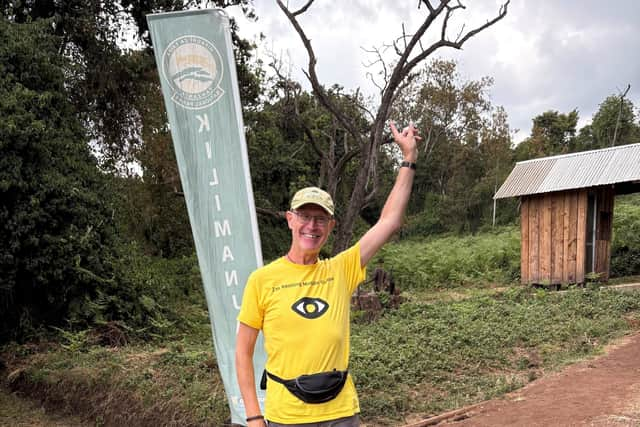

Describing his tick-off-the-bucket-list experience, Kevin said: “It was a fantastic experience from start to finish. It was a physical challenge, mentally and emotionally gruelling but everyone in our group was incredibly supportive. It was a group of great humour and we all looked out for one another.
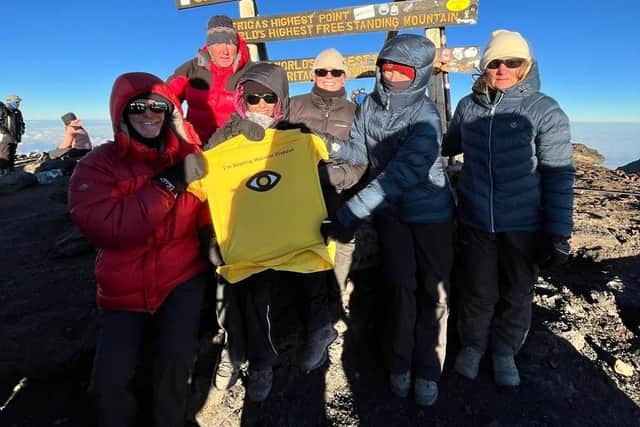
“It was quite a feeling when we got there. It made me think of all those months of preparation, all the challenges I had faced when my eye issues had forced me to postpone the trip. So it was emotional, there were lots of hugs and tears but it was great to reach the top with the group.”
Online donations poured in from family, friends and even complete strangers.
“I can’t tell you delighted I am to have raised £2,500,” said Kevin. “I still have donations to come including my choir. It’s been great and humbling that people put their faith in me, and that was one of the voices in my head, which inspired me because I did not want to let them down.”
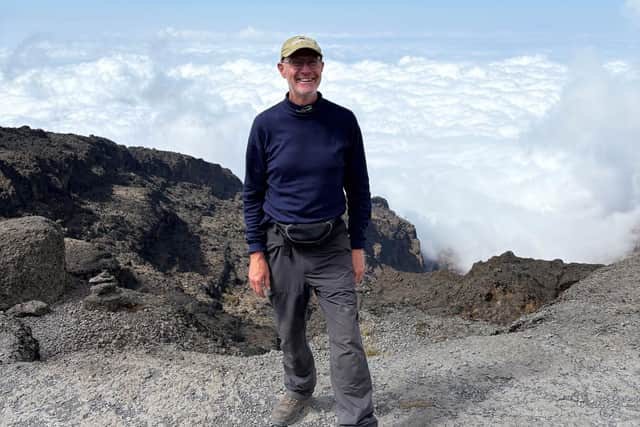
In the last few years, Kevin has required injections into his eye for a condition called myopic macular degeneration (MMD). These injections were able to stabilise his vision, but Kevin has also undergone timely surgery for a detached retina, which could have also meant losing his sight.
He now has an annual check-up including an OCT scanner to monitor the back of his eye. The Macular Society highly recommends people have their eyes tested by an optician every one to two years.
Kevin said: “It shows how important these eye tests are. I remember the day I went, the optician didn’t say I had macular degeneration but with the scanner they picked out the bumps on the imaging which told her I needed further assessment.
“Without an OCT scan, it might have been a longer period before I knew there was a problem, and the condition might have deteriorated. I am seen annually now and that’s great, it’s the peace of mind it offers and it’s well worth it.”
Macular disease research is looking to find not only a cure but more treatments to make people’s lives as easy as possible with sight loss. Just this week, a revolutionary, tiny implant which works alongside specialist glasses has enabled a group of people with dry age-related macular degeneration (AMD) to read again, who had previously lost all central vision.
Kevin said: “If it wasn’t for research, if we didn’t have injections today then I would have lost my sight to MMD. When it came to my detached retina, I was so close to losing more of my sight, and that’s such a mental challenge, to lose your key function.
"So, this is a way I can give something back to the Macular Society, which is very important to me and others who have got far more significant sight loss than I have.”
Nearly 1.5 million people are currently affected by macular disease and many more are at risk, with around 300 new diagnoses every day.
The disease can have a devastating effect on people’s lives, leaving them unable to drive, read or see faces. Many people affected describe losing their sight as being similar to bereavement. There is still no cure and most types of the disease are not treatable. AMD is the most common form of macular disease, affecting more than 700,000 people, usually over the age of 50.
For more information on macular disease and to get support, call the Macular Society Helpline on 0300 3030 111, email [email protected] or visit the website: www.macularsociety.org