
Review: Race Retro at Stoneleigh identifies green shoots in the motor industry against a background of accepted volatility
Reviewer Clive Peacock went along to Race Retro at Stoneleigh to look for the green shoots of recovery in the motoring industry. Here are his thoughts.
Green shoots of exciting developments are a relief to traders, auctioneers, exhibitors and organisers of future motoring events but the industry continues to face major challenges.
Those green shoots for the future are ‘sustainability’, ‘mentoring’ of young enthusiasts and ‘red tape removal’! Overcoming the setback of a cancelled event last year due to flooding at Stoneleigh, Race Retro was back enjoying the mild, and at times, sunny weather of last weekend.
There was much to explore and it was possible to listen to the stories of those who achieved success in motorsport and wonder at how some were able to make light of the dangers to which they were exposed! However, volatility in the industry was a consistent theme across the Stoneleigh site. Traders were badly affected by a significant downturn in footfall from major European countries, who for many years, would consider Race Retro the start of their annual search for those missing electrical and mechanical parts identified during their winter rebuilds!

Relying on the regular German, French and Belgian visitors is over as they no longer set foot in the UK due, in no small part, to the impact of the UK’s decision to leave the EU. Red tape and customs difficulties involved in buying supplies from UK events makes the journeys unviable in terms of cost and time devoted to the paperwork.
One frequently heard topic of conversation at the coffee points was “when will the decline in classic car values will end?”. Consensus from the three days is “not yet”. Clearly, agents and dealers recognise the decline began before the Covid debacle with 2016 recognised as a peak in values. A well-established Morgan dealer and a regular contributor to the event confirms prices have not yet returned to pre-Covid levels. ICONIC Auctions held a very strong auction in terms of numbers of entries; their announcement on the auction result is eagerly awaited.
Bidding on the Ford Escorts and Sierras and similarly priced sporty models was brisk, however, the McLarens and top end sporty Bentleys struggled. With top end buyers hanging on to their funds and classic car dealers already awash with stock, this industry is stuck on a plateau. As a regular autojumble trader reported from stand AJ03, “this country’s economic policies are making viable trading increasingly difficult”. With doubts in people’s minds about the economic fortunes of this country, the green shoots of sustainability are one of few bright lights being explored and products developed.
Drivers of road, motorsports and classic vehicles face a critical challenge - how to reduce their impact on the environment and, ultimately, the planet. Production of sustainable classic and racing car fuels addresses this problem head on by balancing innovation and the environment with the production of unleaded and diesel fuels for motorcycle, classic and racing engines. Fuel ranges derived predominantly from second generation biofuels manufactured from agricultural waste, such as straw and by-products or waste from crops which are not used for consumption are now in production. Those who continue to use deeply unpopular “legacy” fuels, derived from fossil-based fuel containing no sustainable content, are encouraged to look at now increasingly popular “heritage” fuels which incorporate a sustainable content whilst remaining true to the needs of classic vehicles. With “legacy” fuels set to become increasingly hard to find as new legislation begins to bite, veteran and vintage car owners will seek new alternatives. This is one of the ways the industry is moving.
Another important initiative is the encouragement of the involvement of the younger generation by removing the massive financial burdens that prevent this. Paddock Speedshop is developing a new TV show to tell the story of a cadre of young enthusiasts in their 20s who embark on a journey to restore and later drive classic cars. As producer Craig Blake-Jones suggests “we need young people in the industry, otherwise we are out in the cold”. Their Press Conference on day one of Race Retro brought together a number of journalists to take part in the unveiling of the latest car in their fleet - a Marcos.
As usual the Talk Motorsport timetable was loaded with legends of the sport including Rauno Aaltonen, Jason Plato and Matt Neal. Catching the imagination for very different reasons were the interviews with Nicky Grist (co-driver with Colin McRae, for many the “people’s favourite”) and Ian ‘Fluxie’ Flux British GT Champion in 1996. Grist spoke most intelligently and articulately about the highlights of the “Safari rallies” and the skills required in making the opportunities of dangerous stage jumps. In contrast some enjoyed the extremely light-hearted approach Flux adopted when describing his successes and promoting his book, “For Flux Sake”!!
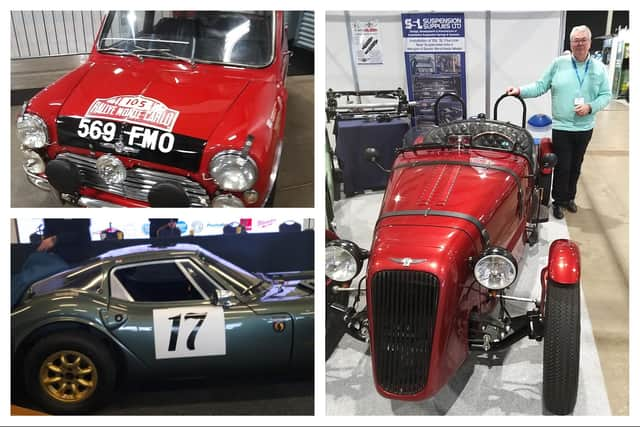
Saturday and Sunday featured the live rally stages with early Morris Minis and Ford Escorts very prominent. Another treasured name of our motoring history made a reappearance as the Austin Arrow, reviving memories of the original Austin Seven of 1922. With its new EV sports car, built near Mumbai and finished in Rayne, Essex, the marque is very much back! What a positive and fitting way to end this review of three invigorating days at Stoneleigh.