
Trees felled by HS2 - including the much-loved Cubbington Pear Tree - form part of poignant exhibition currently on display in south Warwickshire
Trees felled by HS2 - including the much-loved Cubbington Pear Tree - form part of a poignant exhibition currently on display in south Warwickshire.
The Lost Trees, by artist Nancy Cadogan, is a constantly evolving project has travelled the country over many years - but its exhibition at Compton Verney will take on a local significance, with around 13 paintings, as well as drawings made from the local soil.
At Compton Verney, the exhibition consists of mainly new works made in direct response to the area and the local landscape, focussing on the memories and stories of people who live in the local area.
Part of the focus will be the loss of trees across the region, particularly due to large-scale infrastructure developments such as the HS2 railway line, which has dramatically altered the local landscape.
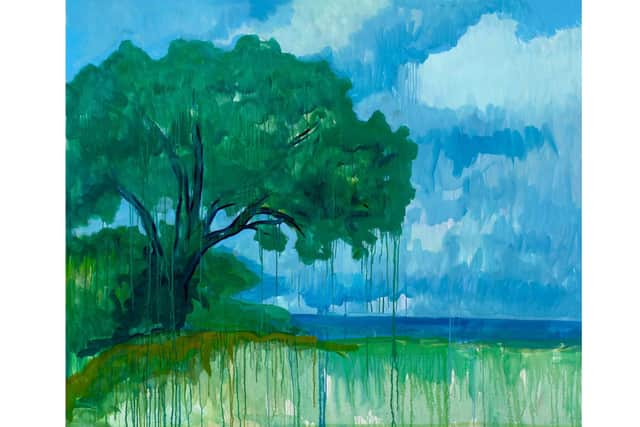

That, of course, includes the Cubbington Pear Tree, a much-loved landmark that was felled in 2020, along with many other trees in South Cubbington Wood, to make way for HS2.
The pear tree was thought to be more than 250 years old and in 2015 it was voted as England’s Tree of the Year.
The significance of the Cubbington tree and its impending fate were reported nationally and it became a symbol of the campaign to prevent extensive environmental damage by HS2.
Nancy Cadogan said the tree had "great local significance," adding: "People got married under it and loved it.
"When plans for the HS2 route came out to fell this tree, there was a huge campaign by people of Cubbington to save it – it even had its own Twitter account and was declared Tree of the Year.
"People were passionate about it. It had a local but passionate campaign to save it."
She added: "This is the second version of the tree I painted for ‘The Lost Trees’ and is one of the trees that inspired this whole project, in the beginning of this journey, an example of how people care so deeply about the trees in their landscape.
"They have an emotional as well as an environmental impact on the people around them.
"This new version of the Cubbington Wild Pear is much larger because I feel that this Warwickshire tree was a key tree for the local community. What’s lovely about this show is that it’s all very local and people can commemorate and talk about the trees they have lost."
Talking about the whole exhibition, she said: "I am thrilled for ‘The Lost Trees’ to be shown at Compton Verney. It is a place steeped in the magic of its own landscape and the history and life of its trees, which are so important to its visitors and community.
"For me it is important to bring this exhibition here, so close to the origins of this project, which was in part a response to the mass felling of trees for the HS2 railway. "To make new work here and continue to tell the story of ‘The Lost Trees’ is a privilege."
Another south Warwickshire tree that features in the exhibition is Shakespeare’s Mulberry Tree in Stratford.
The Lost Trees premiered in June 2025 at the Garden Museum, London, and began its goal of mapping the lost trees of England with stories about individual trees, which have been contributed by the local communities.
Abigail Viner, director of creative programme and engagement at Compton Verney, said: "Compton Verney is delighted to be working on a new site-specific iteration of The Lost Trees, an inspiring exhibition by artist Nancy Cadogan.
"This poignant project serves as both a memorial and a tribute to trees that have been lost, reflecting on their deep emotional resonance in our lives as well as their vital importance within the natural world.
"The exhibition at Compton Verney will comprise predominantly new work, including pieces created in response to suggestions from local residents. It will also celebrate and document a selection of ancient trees within the surrounding landscape, some of which are over 200 years old, highlighting their enduring presence and ecological significance."
The Lost Trees exhibition is currently on display at Compton Verney, running until November 22. For more information visit https://www.comptonverney.org.uk/whats-on/nancy-cadogan-the-lost-trees/