
Essential restoration and maintenance work to begin on historic Warwickshire bridge
Essential restoration and maintenance work to the historic Bidford-on-Avon River Bridge will soon begin.
The work is part of a wider, jointly-funded, historic bridge maintenance programme (HBMP), which is a venture between Warwickshire County Council (WCC) and the Department for Transport’s Highways Maintenance Challenge Fund.
The HBMP aims to preserve some of the most significant heritage bridges across the county.
Work is scheduled to begin on Monday (March 16), subject to River Avon levels, and is expected to run for approximately six months.
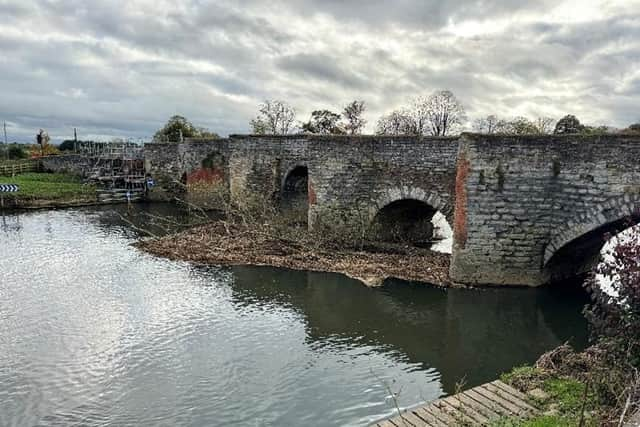

However, WCC has said weather conditions, flooding, and additional stone replacement, could impact progress, leading to a delay in the intended completion date of late September 2026.
The renovation scheme will maintain vehicle crossings after the initial site setup.
An initial two-week, off-peak (09.30am to 3.30pm), road closure to vehicles is planned to enable the installation of access scaffolding.
Pedestrian crossings will be maintained at all times during this closure, with cyclists instructed to dismount on crossings.
These works will include refacing and replacement of weathered spandrel and arch stones, repointing of open mortar joints and reinforcement of cutwaters.
Councillor Jennifer Warren, WCC’s portfolio holder for transport and planning, said: “We acknowledge the impact that these vital restoration works will have on residents local businesses, so have made sure that vehicles will be able to cross once the site has been set up, to keep disruption to a minimum.
“Bidford Bridge is more than just an integral part of the local transport network.
"It is part of the county’s heritage and needs to be maintained to preserve that.”
Bidford-on-Avon River Bridge, a Grade I listed structure and Scheduled Ancient Monument, is one of the eight key heritage assets selected for specialist conservation works.
The bridge is a historically significant crossing of the River Avon, whose stone arches and cutwaters have endured natural weathering, increased traffic volume and significant cycles of flooding.
These conditions have led to the erosion of stone, damage to cutwaters on the upstream elevation, and mortar loss leading to a general deterioration.
WCC says the work “will ensure the structure remains safe, resilient, and preserved for future generations while continuing to support Warwickshire’s transport network”.