
From our archives: How the story of Leamington Waterloo veteran helps reveal fascinating twist on history of Britain’s brass bands
The story of a Leamington war veteran - found in the archives of the Leamington Courier - has helped reveal a fascinating twist on the history of Britain’s brass bands.
Contrary to popular belief, the brass bands weren't all originally from the north - with many formed "down south" by soldiers returning from the Napoleonic Wars, according to new research.
The study, by a Cambridge University historian, debunks the idea that the iconic musical ensembles were a civilian and exclusively northern creation, with a bit of help from the archives of the Leamington Courier.
It is widely believed that brass bands originated with coal miners and other industrial communities in northern England and Wales between the 1830s and the 1850s.
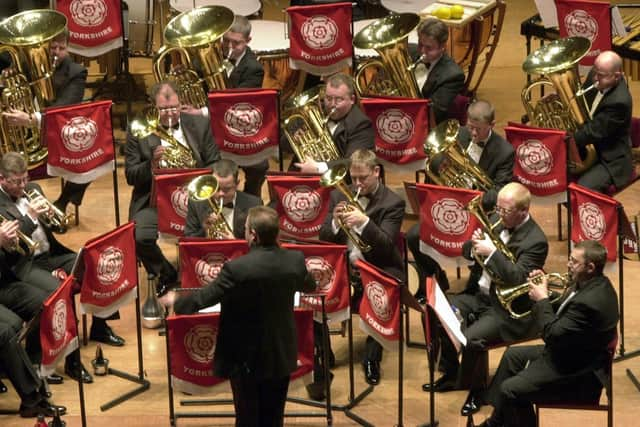

But Dr Eamonn O'Keeffe has found "compelling" evidence to show that Britain’s first brass bands were formed by military musicians as early as the 1810s.
The study, published in The Historical Journal, argues that regimental bands first experimented with all-brass line-ups in the aftermath of the Napoleonic Wars.
Dr O’Keeffe discovered most about a band founded by James Sanderson, a Waterloo veteran, in Leamington.
Sanderson, a former trumpet-major, publicised his ‘military brass band’ in the Leamington Spa Courier in February 1829.
Surviving newspaper reports reveal that the band - equipped with keyed bugles, trumpets, French horns, and trombones - performed at several well-attended fetes and other events in the area.
Sanderson’s military pension describes him as a labourer born in Thrapston, Northamptonshire.
He joined the 23rd Light Dragoons, a cavalry regiment, in 1809, fought at the Battle of Waterloo in 1815 and went on to become the trumpet-major of the 13th Light Dragoons.
He left the army due to epileptic fits in the 1820s.
On June 29, 1829, the Leamington Spa Courier reported that ‘Sanderson's Warwick and Leamington Military Brass Band’ performed at a Waterloo anniversary parade in Warwick.
Dr O’Keeffe says that the Napoleonic Wars, from 1793 to 1815, led to a "dramatic proliferation" of British military bands.
By 1814, more than 20,000 instrumentalists were serving in uniform, in the regular army and militia, as well as several part-time home defence units.
By studying press reports, memoirs and regimental records, Dr O’Keeffe reveals that once demobilised, men and boys who honed their instrumental skills in uniform embarked on a range of civilian musical careers, becoming instructors, wind performers, composers, and even opera singers.
Dr O’Keeffe says many performed in militia and volunteer bands that remained active long after demobilisation.
He said others instructed or participated in a growing range of amateur wind and all-brass bands, which often sported uniforms and "consciously emulated" their regimental equivalents.
Dr O’Keeffe added: “It is widely assumed that brass bands were a new musical species, distinct from their military counterparts.
"They are primarily seen as a product of industrialisation pioneered by a combination of working-class performers and middle-class sponsors.
“But all-brass bands first appeared in Britain and Ireland in a regimental guise.
"As well as producing a large cohort of band trainers, the military provided a familiar and attractive template for amateur musicians and audiences.
"This coincided with expanding commercial opportunities and a growing belief in the moralising power of music.”