
Government's proposed police reforms "could leave residents worse off" warns Warwickshire crime commissioner
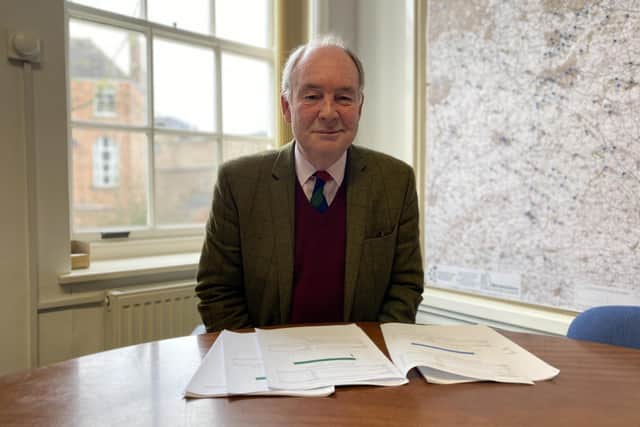
Police and Crime Commissioner for Warwickshire Philip Seccombe has issued a clear warning that proposals set out in the Government’s Police Reform White Paper risk leaving local residents worse off and could damage the strong progress made by Warwickshire Police in recent years.
On Monday (January 26) Home Secretary Shabana Mahmood announced “the largest reforms to policing since the police service was founded two centuries ago”.
The White Paper, titled From local to national: a new model for policing, outlines a radical blueprint for reform “so local forces protect their community and national policing protects us all”.
It includes proposals for force mergers, a new nationwide police force, ministers being given new powers to intervene directly in failing forces, new targets for incident response times, more than £140 million to be invested in new technology “to catch more criminals and keep our communities safe”, the introduction of a new senior policing role to lead the police’s nationwide response to public disorder, an expansion the roll out of the dedicated mental health crisis line so all officers and staff can access mental health support and encouraging experts in cybersecurity and technology to become special constables.

More information about the white paper can be found here: https://www.gov.uk/government/news/white-paper-sets-out-reforms-to-policing
In response to the announcement, Mr Seccombe has said: “The Government’s Police Reform White Paper sets out significant changes to the way policing may operate in the future.
"While I welcome efforts to improve national capability, particularly through investment in technology and the creation of a National Police Service to better co-ordinate specialist functions, I remain deeply concerned that the proposals to reduce the number of police forces and move towards much larger regional structures will not deliver the improvements the public are being promised.
“For a county like Warwickshire, with its mix of urban and rural communities, being absorbed into a very large regional force risks drawing focus and resources away from the issues that matter here. The belief that a larger force automatically delivers a better service is not supported by evidence.
"Previous attempts at creating very large organisations have shown that they become slower to respond, less connected to local areas and more difficult for residents to influence.
"I will not support a model that creates distance between the public and those responsible for keeping them safe.”
He added: “Warwickshire Police has shown what a local service can achieve.
"The force was the top performing in the country for attending burglaries during the last financial year, ensuring every reported incident received a police attendance and delivering a significant improvement in outcomes.
“These are the results of a police service that knows its communities and has clear local accountability."
Mr Seccombe said he fears that if Warwickshire Police is merged into a larger organisation, incidents currently prioritised and attended in smaller forces will be overlooked in favour of the demands of major cities.
He said rural communities in particular would be placed at a disadvantage.
He said: “We have worked hard to build dedicated rural crime teams, which I fear would be the first to be dismantled or diverted in a regionalised model.”
Mr Seccombe is also concerned that the removal of Police and Crime Commissioners to be replaced by “complex new structures led by regional mayors or council boards” by 2028 would “weaken the clear line of accountability residents currently have”.
He said: “Decisions about policing in Warwickshire should be made in Warwickshire.
"Our residents pay their council tax expecting local accountability, and they deserve to know that their specific concerns are being heard and acted upon.”
Mr Seccombe has also raised concerns that the white paper does not address Warwickshire Police’s issue of a lack of and declining central funding from the Government.
He said: “This has placed increasing pressure on local taxpayers, who now provide almost half of the force budget.
"Reforming the funding formula would deliver far greater benefit to local policing than redrawing boundaries or creating new regional structures.”
Mr Seccombe said that reforms made to policing in Scotland highlights the risks of these new proposals.
He said: “More than a decade after the creation of a single national force, confidence has fallen sharply and concerns remain about the loss of a strong local focus.
"The lessons are clear. National capability is important, but it must not come at the cost of local identity, scrutiny and visibility.”
He added: “I will continue to speak up for Warwickshire to ensure the Government understands the consequences of the changes it is considering.
"Our priority must always be the safety of our communities.
"Ultimately the White Paper provides far more questions than answers, notably on timings for these reforms to come into action which forces will be keen to know.
" I will work with ministers where proposals will genuinely support policing, but I will firmly challenge those that risk weakening the service local people rely on.”
Warwick and Leamington MP Matt Western has also commented on the proposed reforms.
Mr Western said: “I know the [Warwickshire] Police and Crime Commissioner has a different view on the recently announced policing reforms, but I believe the changes will leave residents in our towns better off with more resources delivered at a street level, furthering the bobbies on the beat that the public understandably want to see.
“One of the first changes announced, and one that I campaigned for in Parliament, was to put an end to Police and Crime Commissioners as they were costing millions of pounds, which I believe could be better diverted into frontline policing.
“There is obviously much to debate around the policing reforms, but I hope, and will push for this to be the case, they will deliver a service which best serves the concerns and needs of our communities.”