
How a partially sighted three-year-old girl from Kenilworth avoided isolation during lockdown thanks to Guide Dogs charity
Audrey Martin, who has a neurodegenerative condition which has left her with limited remaining vision, took part in the charity's series of online sessions which encourage children to develop a broad range of skills and use their non-visual senses.
A three-year-old girl from Kenilworth, whose sight condition means she can only see light and dark, has been able to avoid isolation during the pandemic thanks to story sessions run by charity Guide Dogs.
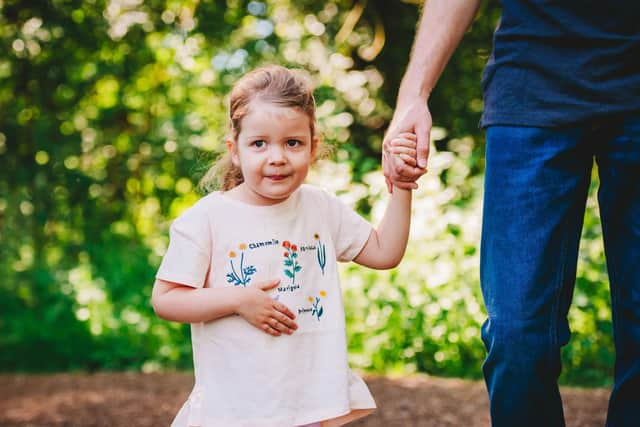

Audrey Martin, who’s lived in Kenilworth all her life, has a neurodegenerative condition which has left her with limited remaining vision.
The condition also affects her mobility and she’s unable to walk long distances, relying on a wheelchair most of the time.
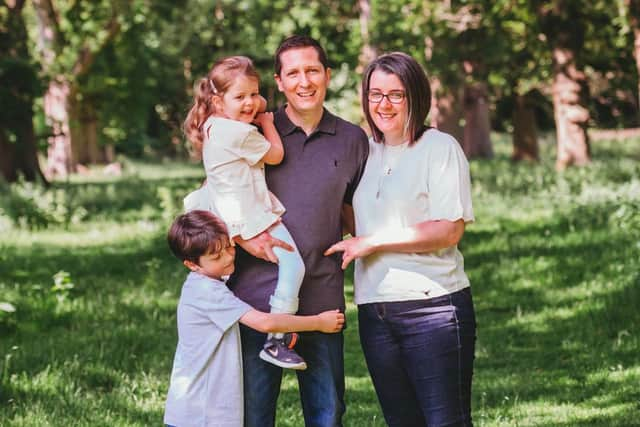
Her parents first noticed a change in Audrey’s eyes at a young age.
Elaine Martin, Audrey’s mother, said: “When Audrey was six months old, we noticed her eyes were wobbling.
“We started off with a misdiagnosis and it’s been a long journey to find out the conditions she has – she’s still undergoing genetic testing now.
“At first, we were really worried, but we’ve learnt to accept it. We now try to make the most of all the positives in life and enjoy family time together.
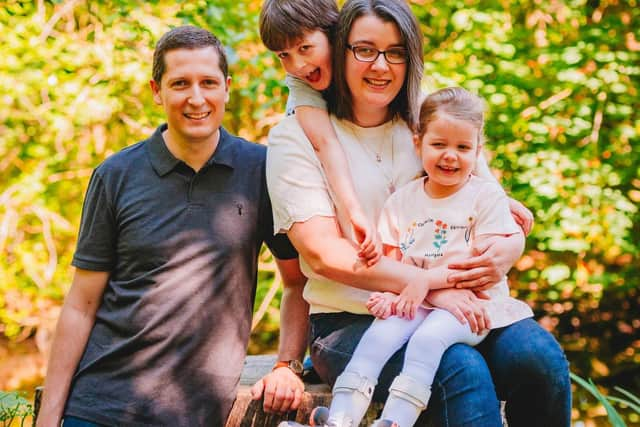
“Audrey can’t see our faces or objects, but she has light and dark perception.
“She’s a happy, sharp-witted and determined girl who wants to be independent.”
Just before the COVID-19 pandemic hit, Elaine got in touch with sight loss organisation Guide Dogs to see if they could provide any support.
Elaine explains: “Going into lockdown, we hadn’t engaged with anyone on anything.
“Audrey was used to frequent appointments, hearing tests, eye appointments - she lives in a world where she meets lots of people.
“The worst-case scenario was that Audrey could have become isolated during lockdown.”
Guide Dogs suggested Audrey and her family take part in their My Time to Play programme.
The free service for children with sight loss, led by professionals, features a series of online sessions which encourage children to develop a broad range of skills and use their non-visual senses.
Each session is based around a sensory story and includes songs, movement and related activities.
Elaine said: “Audrey really loved it. She would intently follow the story and have a giggle.
“She’s very food orientated, so she liked it when it involved food.
“She’s so social and she embraced making new contacts with people and building a rapport.
“Retrospectively with Covid, it was good for her communication and social skills.
“Her brother Patrick would help gather the things that were needed – it was helpful for him to find ways he could help his sister.”
Now that lockdown has eased, My Time to Play sessions will be moving to in- person groups, where families can meet face-to-face.
The first group session starts in October in Coventry, but further sessions will be held throughout the Midlands.
Elaine added: “I’m relieved that Guide Dogs support children with a vision impairment, as well as adults.
“When the face-to-face sessions start, it will be amazing for families in a similar position to be able to meet each other in a real environment.”
To find out more about Guide Dogs’ My Time to Play programme and other services for children with a vision impairment, visit the charity's website, call 0800 781 1444 or email [email protected]