
Kenilworth professor among four scientists from Warwickshire to win prize from the Royal Society of Chemistry
A professor from Kenilworth is among four scientists from Warwickshire to have won prizes from the Royal Society of Chemistry.
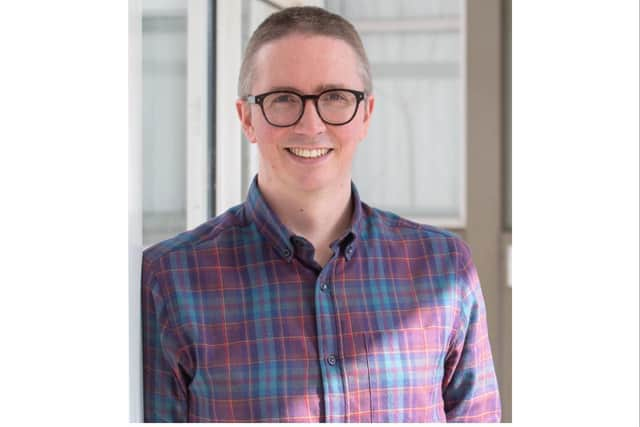
Based at the University of Warwick, Professor Scott Habershon was given the Bourke-Liversidge Prize for the development of simulation methods to predict molecular dynamics across the timescales of chemistry.
The other county winners were Professor Reinhard Maurer, Professor Tim Bugg and Professor Sébastien Perrier.
The awards were given out in the research and innovation section and each winner received prize money and a medal.


More on Professor Habershon’s work
The dynamics of molecular motion and chemical reactions span an enormous range of timescales, from the ultrafast photochemistry of vision and photosynthesis to the years-to-decades-long breakdown of plastics.
Professor Habershon’s research team uses computers to simulate this wide range of chemical timescales: they write video-game-like simulations that mimic the real world and help us understand how chemical reactions happen at the microscopic level of atoms and molecules.
The group’s simulations enable them to make predictions about how different molecules will react and behave in the future and offer an important alternative to experimental chemistry.
For example, the group is building computer models of how plastics might break down in the environment over the coming decades – an approach that is faster than waiting for plastics to degrade in the lab.
They are also using computers to search for new catalysts that can transform carbon dioxide into other useful chemicals rather than letting it escape into the atmosphere. These examples show how computer simulations can complement lab-based chemistry in addressing some important global challenges.
After receiving the prize, Professor Habershon said: “I'm delighted to win this prize.
"It's fantastic recognition of a lot of different projects – and brilliant researchers – coming together to help us build better simulations to predict how chemistry happens.”
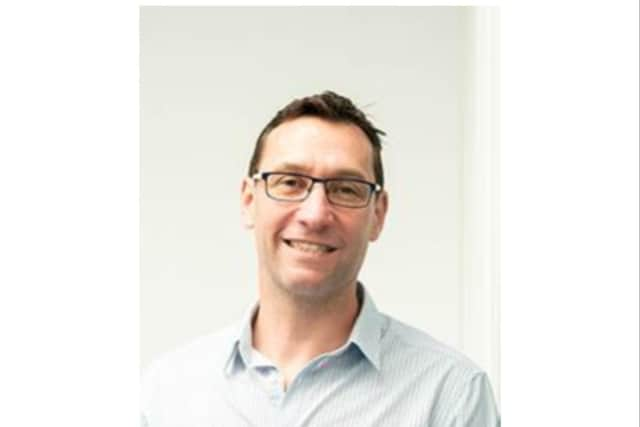
Here’s more about the other winners and their work
Professor Reinhard Maurer – winner of the Royal Society of Chemistry’s Marlow Prize
Based at the University of Warwick, Professor Maurer won the prize for contributions to the fundamental understanding of molecular structure and chemical dynamics at hybrid organic-inorganic interfaces through the development of computational simulation methods.
Many of the big challenges in modern chemistry involve developing new ways to convert chemicals into usable energy.

When certain forces, like light, electricity, or magnetism, act on the meeting points (interfaces) of different materials, they can cause the movement of tiny particles (electrons) and their properties (charge and spin). This movement creates and breaks the chemical bonds within those materials more selectively than using high heat or pressure.
This principle is applied in photoelectrocatalysis, battery technology, photovoltaics and fuel cells – all of which are key technologies for transitioning to sustainable energy and materials production.
Photoelectrocatalytic technologies are still in their infancy, in many cases due to fundamental gaps in our understanding of how light, electricity, and atoms interact at interfaces on a very small scale. This limits our ability to develop better catalysts and more efficient reactions.
Dr Maurer’s research group tackles this challenge using computer simulations to predict how different materials behave and react when combined. Their computational predictions are revealing new mechanisms at play, ultimately leading to the design of new experiments and even better clean energy solutions.
After receiving the prize, Professor Maurer said: “My work straddles disciplines and spans across research communities. As a result, it can be difficult to categorise.
"This recognition of my work was surprising and humbling. It means a lot to me.”

Professor Tim Bugg from near Stratford – winner of the Royal Society of Chemistry’s Interdisciplinary Prize
Based at the University of Warwick, Professor Bugg won the prize for the discovery of bacterial enzymes for the degradation of lignin, and their application to the conversion of lignin to renewable chemicals.
Professor Bugg's research group is working on one of the unsolved problems of the biorefinery: how to convert the aromatic polymer lignin into useful chemicals. Lignin is very hard to break down, but the group has discovered several new bacterial enzymes that can break down lignin and studied how these enzymes work at the molecular level. They have also engineered bacterial lignin-degrading bacteria such as soil microbe Rhodococcus jostii RHA1 to produce useful chemicals like vanillin (used in the food industry) and precursors to new bio-based plastics.
This research, along with the work of other research groups around the world, has established the feasibility of converting lignin using low-energy biochemical transformations into feedstock and high-value chemicals.
After receiving the prize, Professor Bugg said: “It's a great honour to receive an RSC Prize.
"I'm proud of the work that we have done on lignin degradation since 2008, and I've had a number of excellent researchers (PhD students and postdocs) come through my group during that time who have made this possible, so I feel that this is a recognition of their hard work and ideas as well as my own.”
Professor Sébastien Perrier – winner of the Royal Society of Chemistry’s Interdisciplinary Prize
Based at the University of Warwick, Professor Perrier won the prize for interdisciplinary research in the synthesis and applications of therapeutic materials.
Professor Perrier's work sits at the crossroads of chemistry, materials science, and biology, and aims to address pressing global health challenges.
His research focuses on developing innovative materials made from polymers for various medical applications, including combating antimicrobial resistance (AMR) – a major threat to modern medicine – and advanced delivery systems for therapeutics, ranging from small molecules to RNA (Ribonucleic Acid).
Sébastien’s work explores how cells interact with these materials at the nanoscale. His research holds promise for breakthroughs in drug delivery systems, brain-targeted therapies, and antibacterial agents, hinting at a future where nanotechnology plays a vital role in healthcare. Sébastien's interdisciplinary approach extends beyond scientific achievements to training future generations of researchers. His diverse team includes chemists, biologists, engineers, and more and they work in a collaborative environment where everyone contributes to the team’s research.
After receiving the prize, Professor Perrier said: “Receiving the RSC Interdisciplinary Prize is an incredible honour and validation of the collaborative efforts that drive my team’s research across multiple fields.
"This prize is a team effort, and is shared by my amazing research group members and collaborators, past and present.
"It is deeply gratifying to see the recognition of my team’s work on addressing complex challenges at the interface of chemistry, materials science, biology and medicine.
"I strongly believe that the next generation of researchers should be trained in multiple disciplines so that we can address modern challenges.”