
Man from Lighthorne Heath given “48-hours to live” after major crash marries love of his life
David Jenkins was given just “48-hours to live” and yet a year later, due in no small part to the lifesaving interventions of the crew onboard the Warwickshire and Northamptonshire Air Ambulance (WNAA) – David has married his fiancée of nine years, Rachel.
It was a cold winter’s morning when David set off from his home in Lighthorne Heath and headed to work at 7.30am on November 25, 2022.
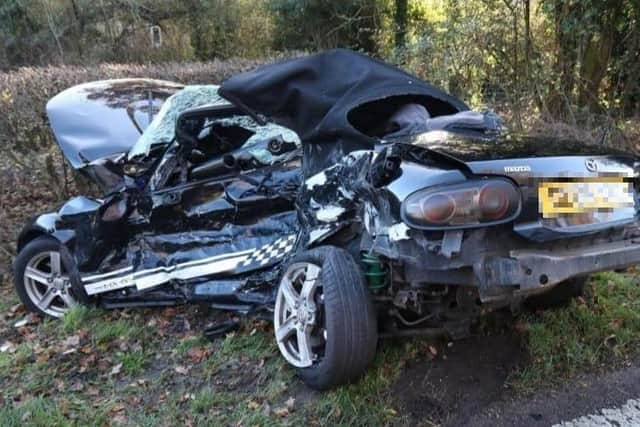
Driving a Mazda MX-5, David was only five minutes into his journey, when he went round a bend near Bishop’s Itchington and was in collision with a car heading in the opposite direction.
Due to the nature and severity of his injuries, David needed advanced pre-hospital emergency intervention fast – which is where the clinical skills of the Warwickshire and Northamptonshire Air Ambulance helped to save David’s life.

“When the red phone rang, we knew this was very likely to be a serious mission as it was a freezing morning and it sounded very significant from the call details,” said WNAA critical care paramedic, Matthew Stringfellow.
The crew lifted in the helicopter towards the incident which, due to its speed, was only a seven-minute flight to arriving on scene. They were able to land directly next to the scene and arrived much faster than if they’d travelled by land to the incident.
“Whilst we were above the incident, we could see it was a big scene with lots of emergency services present. Once we were with David It was very clear he was critically unwell, and we needed to perform lifesaving interventions immediately,” continues Matthew.
David had significant life-threatening injuries including a fractured pelvis, several ribs, and clavicle.
His arm was fractured in three places, five vertebrae – including the top of his neck – both sides of his jaw and eye socket. Lacerated liver and spleen, punctured lung, and a severe traumatic brain injury.
“We quickly examined David identifying multiple life-threatening injuries and we, as a critical care team, alongside NHS ambulance service staff, rapidly provided critical care to him at the scene,” says Matthew.
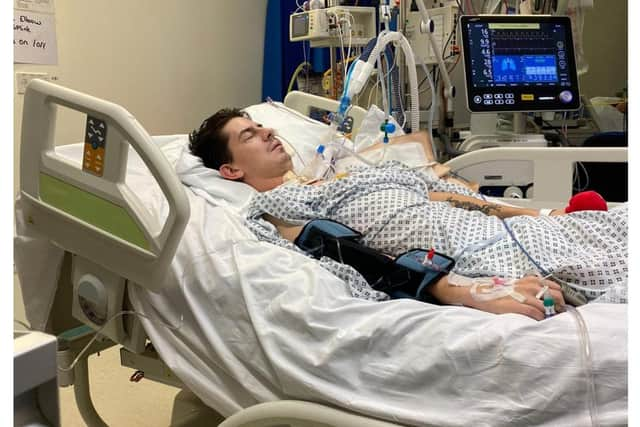
A large amount of care and treatment was given including some significant interventions including pre-hospital emergency anaesthesia, meaning giving David powerful medicines to allow the crew to insert a breathing tube into his lungs so they could take over his oxygenation and ventilation, whilst concurrently providing a transfusion of blood products that they carry onboard the helicopter.
Based on the accident’s location, the crew needed to get David to University Hospital Coventry and Warwickshire (UHCW) in Coventry, where there’s a Major Trauma Centre, and accompanied him in the land ambulance to hospital.
“When we handed David over to the Major Trauma Centre team, we were very worried for David’s life and long-term outcome, due to the extent of his injuries,” Matthew adds.
It was there that the hospital gave David 48-hours to live.
Rachel, David’s fiancée, was working at St Michael’s Mental Health Hospital in Warwick at the time, and once the police had notified her and explained the severity of David’s condition, they picked her up and took her to UHCW so she could be with David.
The police had also informed David’s mother and had taken her to the hospital too. The family gathered at the hospital unsure if David would survive.
Rachel said: “It was such a shock, we knew that WNAA’s critical care team were fantastic and had stabilised his condition at the scene, but we were now in the hospital resus where they were preparing David, so he could go for emergency surgery.”
The team at UHCW performed emergency surgery on David’s arm as his bone was protruding and there was a lot of blood loss, leading to a high risk of infection.
Once in critical care, the team performed further surgery implementing metal plates on both sides of his jaws as well as eight to ten hours of spinal surgery, putting in plates and pins at the top of his spine.
From there David remained stable in critical care, but it was still touch and go.
David also had a tracheostomy to help him breath, and during his stay caught sepsis and pneumonia. He remained extremely unwell.
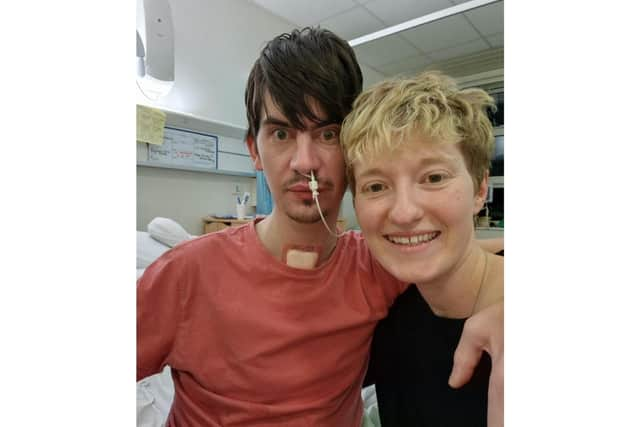
“He spent three months in critical care, where he was in an induced coma. He was then transferred to a neurology ward, and then spent a further six weeks in a rehabilitation hospital,” says Rachel.
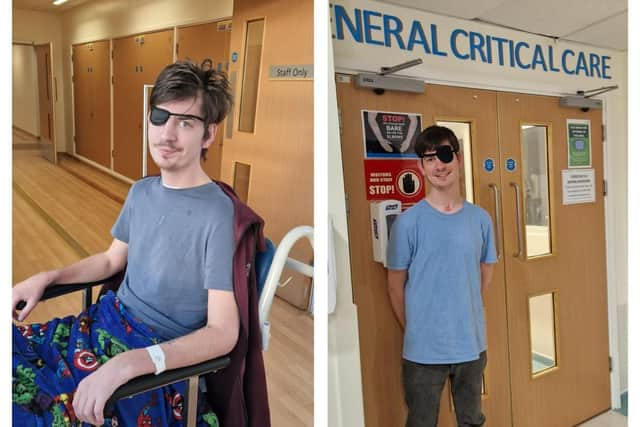
David had to learn how to do everything all over again including walking, talking, and eating, and at the end of April 2023, he finally went home.
Rachel said: “Because of the traumatic brain injury, David does struggle with fatigue, and he has many hospital outpatient appointments, but overall, he’s recovering well.
"From being given 48 hours to live, to returning home and living a normal life – it really is a miracle.”
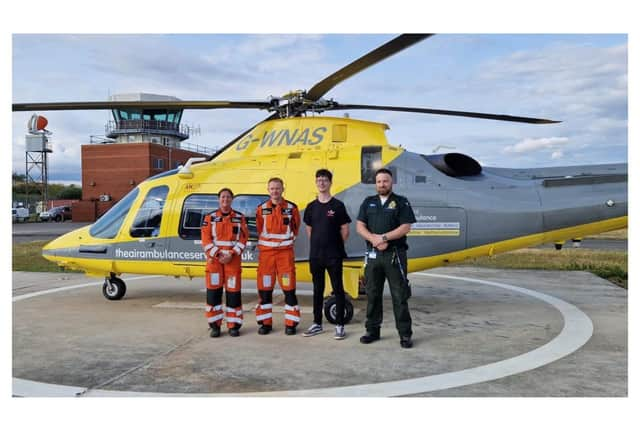
Once David was able to, the couple visited the critical care crew “David owes his life to” at WNAA’s base at Coventry Airport, Baginton.
Rachel said: “Due to the severity of his injuries, the crew were amazed to see the extent of David’s recovery. Due to the nature of his broken arm, they were also amazed he wasn’t an amputee.
“It was great to speak to the pilot and learn about the equipment, the helicopter and crew, and to especially speak with CCP Matthew and CCP Jenny.
"David wouldn’t be here without them all. David is really pleased to show the crew that their hard work pays off, they saved him, and they should understand the amount of good they do every day.”
The couple chose to turn the worst day of their lives into the best day of their lives, as on November 25 2023 – a year after the incident – they got married at St John’s House in Warwick.
“It was so surreal considering a year ago to the day we thought we’d lost him, and then a year on we get to celebrate our lives together and celebrate his life – given back to him and us by the air ambulance crew,” says Rachel.