
Warwickshire County Council: Forward funding was refused for under-threat Great Alne Primary School
Academies that tried to save Great Alne Primary School had requests for forward funding turned down prior to Warwickshire County Council’s plans to close it down.
The knockbacks were revealed during Tuesday’s meeting of the county’s children and young people’s overview and scrutiny committee where councillors ran the rule over proposals to shut down the rural school.
The plans have been subject to significant kickback but council officers – the employed professionals – insist all reasonable efforts have been made to turn things around.
The village school has suffered from plummeting pupil numbers since an inadequate Ofsted rating in 2023 but despite standards improving, it is now down to just 12 pupils.
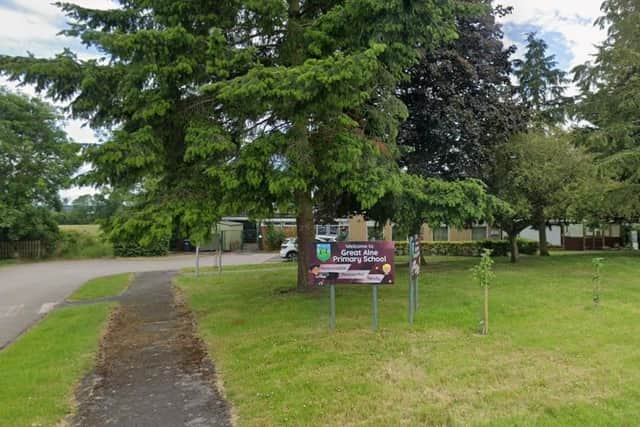

With a low birth rate and capacity at local alternatives, education chiefs at Shire Hall believe there is no realistic prospect of viability.
The inadequate inspection triggered the involvement of academies with the council’s director of education Johnny Kyriacou and executive director for children and young people Nigel Minns highlighting how two such organisations had stepped in to drive up standards with the support of the council before opting against taking on the school.
Missed opportunity?
Mr Kyriacou noted that pupil numbers would need to be around 70 to 75 to make the school viable and that “significant” council resources had “quite rightly, and successfully” gone into raising standards.
Co-opted – non-elected – committee member Michael Cowland, chief executive of the Diocese of Coventry Multi Academy Trust, queried whether the academies involved would have been expected to take on Great Alne’s legacy debts.
Mr Kyriacou confirmed either “would have started with a zero balance” but added: “They didn’t want a zero balance, they wanted forward funding on top of that and that was when the next issue came into play.
“The DfE (Department for Education) asked us to approach the Schools Forum to try to get that money, we said that would be unfair on other schools and we actually pushed back, we didn’t want to entertain asking because that would set a precedent and wouldn’t be fair.
“DfE made clear they wouldn’t provide any forward funding so the main sticking point was finance.”
Warwickshire’s Schools Forum is a body made up of headteachers, governors and external stakeholders that makes decisions or advises on financial matters related to education.
Pleas for more time
Despite the data, a consultation saw more than three quarters of just shy of 200 respondents object to the closure citing the future need for school places and the school’s importance to its patch
A number of elected officials, including Stratford-on-Avon MP Manuella Perteghella (Lib Dem), reiterated those points and referred to past examples of schools reviving from such positions.
Ms Perteghella argued rural schools are the “beating heart of rural communities” that deliver “safety, familiarity and belonging” for pupils.
“Once a village loses its school, something irreplaceable is lost with it,” she said.
She stated that Great Alne’s current numbers “do not reflect its long-term potential” and that “the (council) report highlights a number of strengths that should give the council confidence in its future” before requesting a delay to a decision that is due to be taken by the Reform UK cabinet in charge at Shire Hall in April.
“Warwickshire County Council currently operates as a minority administration,” she concluded.
“With local government reorganisation on the horizon, I believe strongly that any decision to close schools in my constituency should not be taken by this council but by the new unitary council in 2028.”
Local member Councillor Luke Cooper (Restore Britain, Studley) said he had been “inundated by” concerns from 20 affected families, a number that has shrunk as a result of plans to close.
“People say it is not guaranteed (to happen) but all these people, all they hear is the school is being closed.
"I’ve told them no decision has been made but people don’t hear that,” he said.
“When the website stops working, they can’t gather around their community to make more applications to try to help, to do the best they can.
" What they have been through is shocking.
“Something more needs to be done around proper messaging and proper management of expectations to make sure the people we are supposed to be serving aren’t terrified for their kids.”
Representative of the neighbouring ward, Councillor James Norris (Lib Dem, Alcester) added: “Please don’t give up on Great Alne Primary School. “With the right support – financial and administrative – we can turn it around and make this school popular again. It just takes time. “Once a school like this is gone, it is gone forever. We should do everything we can to keep this school alive and take it back to where it was, a very popular and full school which delivered excellent education in a rural setting.”
However, another co-opted member Phil Johnson warned that hearts were ruling heads.
“One of the killer facts on viability is that even in the good times, the school was surviving on a number of children coming in from outside the village,” he said.
“I understand people are very attached to their local school, it is the centre of the community, but with respect, councillors, I think the case being made is an emotional one rather than a factual one.
“It is difficult to see how you could get that budget balancing with the numbers you have available.”
Lessons learned
The panel’s feedback to the cabinet will express concerns over the communication of the proposed closure, future pressures on school places in the area, potential burden on home-to-school transport costs for displaced children and the financial burden of staff redundancies while also acknowledging the school’s bleak financial outlook and the difficulty in maintaining standards with such low pupil numbers.
Mr Kyriacou rounded off by assuring councillors that lessons had been learned.
“Since this has happened we have a much more robust process in terms of identifying and targeting schools, providing financial advice, guidance and support where schools are struggling, talking about a three-year recovery plan,” he said. “We are being far more proactive to try to prevent schools from getting into deficit in the first place. We have definitely taken a lot of learning from this.”