
Council officers say data supports controversial closure of Warwickshire primary school
Warwickshire County Council officers this week told Alcester’s elected official that the data supports the controversial closure of Great Alne Primary School.
Warwickshire County Council officers this week told Alcester’s elected official that the data supports the controversial closure of Great Alne Primary School.
Councillor James Norris (Lib Dem, Alcester) queried the county’s education sufficiency data which predicts around one in four of the area's primary school places will not be filled over the next four academic years due to a drop in demand.
He argued that did not correlate with what he is sees, highlighting the case of one parent whose push for an in-year transfer resulted in rejection for that family’s six closest primary schools.
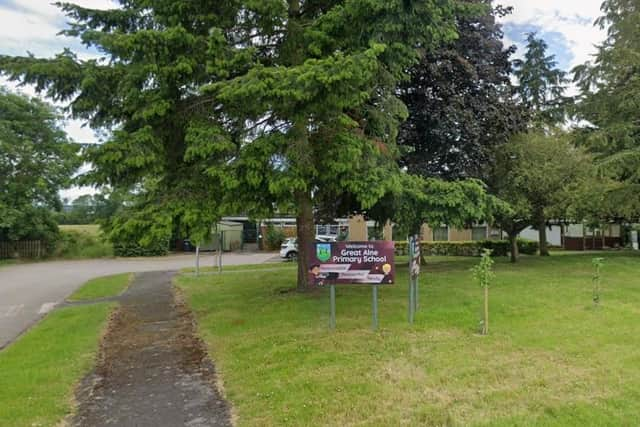

However, officers – the council’s employed professionals – said “all” of Alcester’s spare capacity was at Great Alne and that NHS data indicates less than 50 per cent of Alcester’s primary spots will be filled by children living in the area in September 2026.
What the data says
There are currently 131 primary school places available in Alcester in each academic year with all bar 10 filled in 2025-26.
However, the council says actual need is only anticipated to float around the 100 mark from September. Great Alne has capacity to take in 15 pupils per year group.
While smaller class sizes might sound ideal, schools need a certain volume of pupils to keep the doors open with chunks of funding allocated on a per-head basis.
The numbers in neighbouring Studley and Henley are better with spare places predicted to remain in single figures. There are bigger fluctuations predicted in Bidford, while Stratford Rural is expected to see a similar drop-off to Alcester in the coming years.
The Alcester argument
“The picture painted by these figures is that there is significant capacity,” said Cllr Norris.
“One of my residents is looking to make an in-year transfer for reception but spoke to the (Warwickshire County Council’s) admissions team and was told all of the primary schools in Alcester and in nearby villages are full.
“The closest school she could get a reception place at was the seventh-nearest or the 11th-nearest. The figures show there is capacity so why was this resident told there are no spare places?”
On the “significant reduction” in forecast numbers, he added: “I don’t understand how that can be.
“That isn’t reflected in any other local area and it isn’t reflected in Alcester secondary schools. I can’t think of any reason for such a huge drop in one year.
“I appreciate this is a model but it does appear to be an anomaly.
"Could the model be wrong?
“It doesn’t fit with what we are seeing on the ground. We are seeing full schools, more development, more houses. This is particularly important because these figures are a significant reason to potentially close Great Alne Primary School.
“We don’t have any spare capacity. In the local plan there are two more significant developments in my area which could bring in thousands of new houses.
“The first thing we should be doing is not close the schools we have already.”
Shortfall
School organisation planning manager Emma Basden-Smith replied: “There is spare capacity in Alcester but it is all in one school at the moment.”
When asked by Cllr Norris, she confirmed that was Great Alne but also noted there was capacity for some year groups in other schools.
She explained that NHS data showed there was likely to be 64 children from the Alcester area starting primary school in September 2026.
“We have to consider the fact that only 50 per cent of the children that go to school in the area also live in the area,” she continued.
“Schools (in Alcester) rely on parental preference, pulling in children from other areas. The difficulty is that in some years you will get people attracted from other areas and in other years you won’t – it is very difficult, for the schools in particular.
“It leaves them vulnerable to fluctuations. If something happens to impact parental preference, it will leave a school vulnerable because there aren’t the children in that local area.”
With in-area and out-of-area numbers declining, Ms Basden-Smith said there was “more than enough” capacity “based on current trends”.
“We use average trends weighted to the most recent year to look at the numbers coming in to build the forecast on top of those in the area," she added.
Head of access to education Matt Biggs addressed the in-year transfer case.
“There are available places in the locality but you are absolutely right and I am aware of that particular case – the places are about three miles away,” he said.
“If a parent is not eligible for a place in their local area they would get funded transport.”
He added that greater distances were “not uncommon” in more rural areas, and that in-year movement is different to standard entry.