
River Avon hydro scheme replaced by solar canopies - but will they be a 'liability'?
COUNCIL plans to generate electricity from the River Avon have been shelved in favour of less-risky solar canopies – but one councillor reckons the rethink will still prove a “total liability”.
Stratford-on-Avon District Council’s cabinet – the Liberal Democrat panel of councillors in charge of major service areas – followed the advice of professionals at Elizabeth House in changing course on its renewable energy plans.
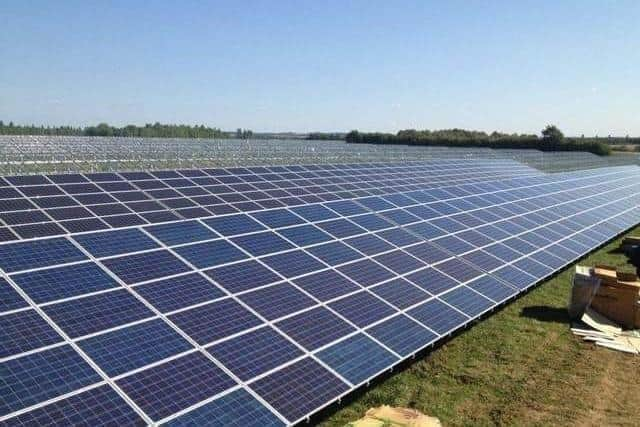

The Liberals had allocated £1.2 million to fund turbines in the river to pass power to the Royal Shakespeare Theatre but the risks were higher and the financial payback period much longer than it would be for solar canopies on the car parks of the district’s leisure centres.
It is estimated the canopies can achieve financial payback in seven years, albeit from a chunkier outlay of £1.8 million that includes funding for battery storage.
Deputy chief executive Tony Perks told the cabinet that the river project was “shown to be viable but marginally”, adding that it “involved quite a level of engineering risk”.
The switch to solar was welcomed by the Conservative opposition but ex-Tory group leader Councillor Sarah Whalley-Hoggins (Brailes & Compton), now with Reform UK, questioned the financial projections and the validity of forcing this on any new council that emerges from local government reorganisation – as things stand the district is set to be abolished and replaced by a form of unitary authority from April 2028.
“The feasibility study focuses on up-front capital costs which obscures the project’s lifetime fiscal burden,” she said.
“The council which follows this one, and taxpayers, will inherit a significant and perpetual liability for ongoing operational costs – for example, inverter replacements are needed every 10 years.
“Security of the site will need beefing up massively, it is a highly-valuable resource. Has any consideration been given to that? There is also the question of climate vulnerability, subject to damage from hailstones or high winds.
“The key one is battery degradation. There is a massive gap between your optimistic net gains and the real-world performance of what you have before you.
“Technology becoming obsolete is a real risk. More efficient and cheaper battery technologies will emerge, making this installation a very poor long-term asset for the public and a total liability for the council that replaces this one.
“If this is being done to achieve net zero by 2030 as laid out in the council plan, how are you justifying this colossal spend given that this council will likely cease to exist in 2028?
“How do you reconcile the carbon pollution of the manufacturing, which will inevitably be in China where the main components are made?
"By my calculations, that will add massively to your carbon footprint.”
"She also argued tourism would be hit if visitors are “walloped by the glare of an extremely large solar panel installation”, at which point she was cut off by leader and meeting chair Councillor Susan Juned (Lib Dem, Alcester East).
“I’m sure you can raise all of those (points) at the full council meeting,” she said before referring to her experience of working in the renewable energy sector
“Many of those issues have been raised time and time again,” said Cllr Juned, arguing that fossil fuel infrastructure brings about the same issues with an “absolutely massive” impact on climate change.
She said solar panels are now much more efficient and use less materials with “major research” on efficiency taking place in UK universities.
Later, portfolio holder for housing and customer services Councillor Liz Coles (Lib Dem, Stratford Hathaway) advocated following the evidence after seeing her own preference fall by the wayside.
“I have to confess to a real liking for the idea of the hydro project,” she said.
“This is one of the reasons it is so important to have done the feasibility studies to get a realistic picture of what can and can’t be done, the things that can impede or improve the delivery of the project.
“In view of the instability in the world at the moment, we don’t know what is happening.
"I don’t think anyone here would think it a bad idea to show leadership on reducing our reliance on fossil fuels.”