
Robotic knee surgery in Coventry: transforming joint replacement Surgery
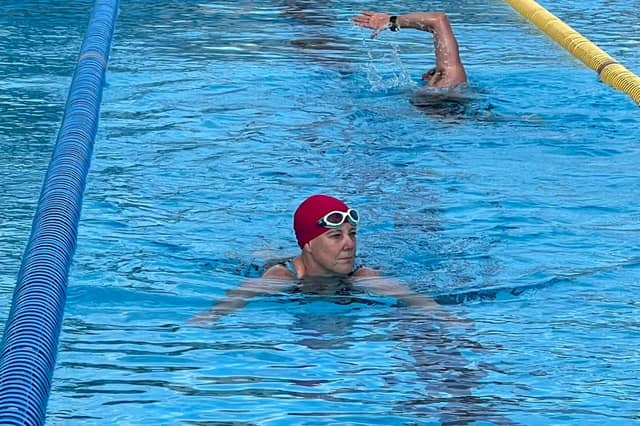

How Mako® robotic knee surgery has turned life around for Jane, ending months of acute pain and lack of mobility.
55-year-old Jane Spence, a midwife from Rugby, has always been active, enjoying martial arts, outdoor swimming and long walks with her three dogs.
After experiencing persistent pain, and unable to walk without crutches, she underwent a knee replacement in July this year at the Meriden Hospital, Coventry using a robotic surgery technique Mako® and is now full back to living her active lifestyle.
It’s the second knee replacement she’s had – but she says the robotic surgery technique meant a quicker recovery time, less swelling and more manageable pain, giving her life back to enjoy a fully functional knee.
“It’s given me my life back,” says Jane. She had always been fit and active. With three dogs – two chocolate Labradors and a Cockapoo to walk every day, an active job which has involved spending hours on her feet and walking hospital wards, and years of martial arts knee problems started relatively early for Jane.
Four years ago, her left knee was replaced. It was part of a research trial and, patients taking part did not know if the surgery they had involved using robotic technology or not.

Jane was under the care of Mr Bryan Riemer, Consultant Orthopaedic Surgeon, who is an expert in this field in Coventry.
“The surgery went so well and the movement I got back was so good that I was convinced I must have had the robotic surgery,” said Jane. When her right knee suddenly started to give her a lot of pain – something she first noticed as she climbed on the back of her husband’s motorbike for a ride – she did not want to wait for years and so turned to that same surgeon for a private consultation. He remembered her and the operation and was able to reveal hers had, in fact, been done by him without the aid of robotics. But, he told her, if he could choose he would always use the robotic technology for knee replacements.
“The first operation was on the NHS, and I was really pleased with the outcome,” says Jane. “But the wait for the right knee was about two-and-a-half years.” At 55 Jane didn’t want life to slow down and leave her unable to do the things she loved. Although she stopped doing martial arts she had taken up outdoor swimming, and was a real convert, plus she still loved dog walking and had a holiday booked in Devon in November with friends and wanted to enjoy getting out and about.
"Choosing the robotic procedure was the best decision I made. There’s nothing negative about it, and I’d recommend it to anyone it’s an investment in peace of mind and recovery."
She says the left knee has been brilliant, but the recovery was slow and painful. Her legs swelled up right the ankle and were tight and painful for weeks and each stage of her recovery and rehabilitation was much slower than this time.
“I’d say it’s been about twice as fast,” said Jane, who had no swollen legs or bruising this time, and was off her crutches and doing slow walks without crutches after four weeks.
At six weeks she was driving herself and the dogs out to the countryside for off-lead walks and now she is back to swimming two or three times a week, dog walking daily, she was able to fully enjoy her Devon holiday and is looking forward to a good weather day to get back on the motorbike.
“I hardly even think about my knee now, it just feels normal,” she said.

What is robotic-arm assisted knee surgery
The Meriden Hospital. Mako® Robotic-Arm Assisted Surgery transforms how joint replacement procedures are performed by integrating 3D CT-based planning software and AccuStop™ haptic technology. It's a tried and tested technology that has been helping joint pain sufferers for more than a decade.
Knee replacement surgery is an operation which involves removing damaged parts of your knee joint and replacing them with artificial elements, also known as implants or a prosthesis.
It can restore function to knees, reduce or eliminate pain and significantly improve quality of life but full recovery can take a while, and lots of physiotherapy. The precise nature of robotics in this kind of surgery has a range of benefits – including less pain and a faster recovery time.
Robotics-assisted knee replacement surgery is when your surgeon uses robotic technology to help them perform knee surgery. It gives them even more control and accuracy over planning and carrying out the procedure, which can be bespoke for an individual’s circumstances and anatomy.
During the procedure, this detailed plan is used to ensure the accurate removal of damaged bone and cartilage as well as precise positioning of the implant.
This approach means patients can expect not only improved function but a more natural feeling in the new knee. It could also mean less pain after the procedure, shorter recovery times and overall better outcomes for you.

Meet the consultant
Mr Bryan Riemer, Consultant Orthopaedic Surgeon, is a Consultant Orthopaedic Surgeon with advanced fellowship training in hip and knee joint replacement surgery. He was formally the Deputy Training Programme Director for the Warwick Orthopaedic training program and teaches on several educational courses.
He is also the principal investigator for the RACER knee and RACER hip trials, based at University Hospitals Coventry and Warwickshire NHS Trust which are comparing conventional joint replacements with robot-assisted replacements.
Don’t suffer knee pain
If knee pain or limited movement is holding you back, get in touch with Meriden Hospital to see how Mako® robotic-assisted knee replacement could change your life. Say goodbye to discomfort and hello to improved mobility, so you can get back to the activities you love—sooner than you might expect!