
Romeo & Juliet review - Ballet says more than words on Stratford stage
Peter Ormerod reviews Romeo & Juliet, presented by Northern Ballet at the Royal Shakespeare Theatre, Stratford
A bold move, this: an institution that prizes text and voice, hosting a production that does away with both.
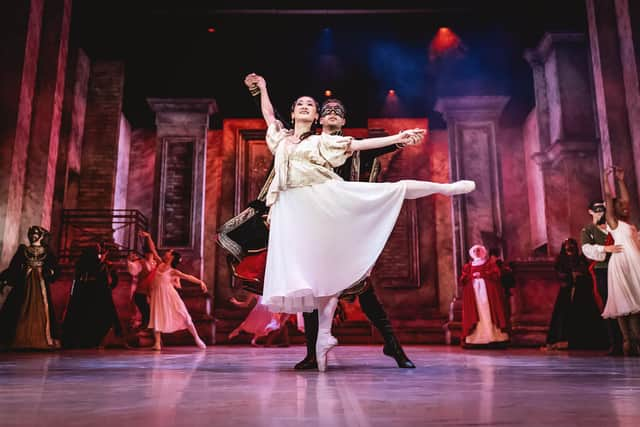

It is many years since the RSC welcomed a ballet, and the first time Northern Ballet has danced on its stage. The company specialises in ‘narrative’ – otherwise known as telling stories. And there are moments during this production when it seems unlikely this particular story has ever been told better.
The plot is unchanged. The two young lovers are from warring families; their lives are defined by passion and violence, and so are their deaths. Sergei Prokofiev composed it in 1935, and initially changed the ending to make it happy. The Soviet cultural commissars of the time insisted however that the original tragic denouement be reinstated: whatever their flaws may have been, they got this one right at least. Part of the score will be familiar to many due to its use as the theme tune to the BBC series The Apprentice; it is a joy to hear it for its intended use, although jealousy and vanity abound here, too.
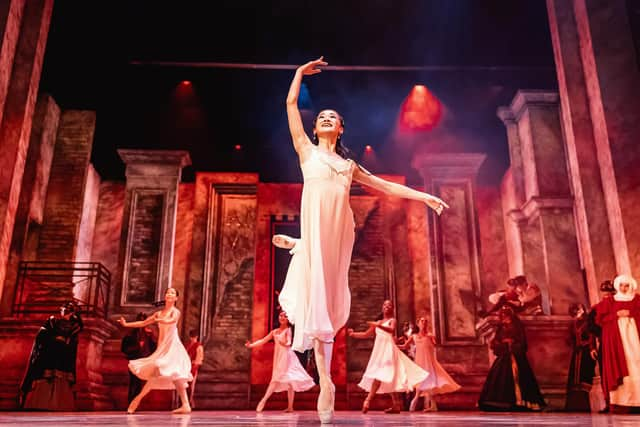
Anyone familiar with Romeo & Juliet should have no difficulty following the action, so clear are the motions and so effective is the staging. And anyone unfamiliar with Romeo & Juliet may find it easier to understand than various conventional productions: the lack of words, wondrous though they may be, arguably broadens its appeal.
And, at times, the story is served superbly by this dependence on showing rather than telling. This is perhaps most evident in its final scene: no words are necessary to evoke the tragedy. Indeed, this may be the superior way of expressing the depth of emotion as first one, then the other, feels the devastation of grief to the extent that they cannot survive it. There is no language to get in the way: the image of Romeo trying once again to dance with Juliet, now limp and lifeless, has a sublime poignancy. The musical accompaniment reinforces the uselessness of language at that moment.
And make no mistake: these dancers are acting. They are not merely following choreography: they are masterful in their use of facial expressions and gestures, and imbue the merest movements with great meaning. Even among such a talented cast, some performances stood out, most notably Saeka Shirai as Juliet; she was almost supernatural, a feather caught on the breeze, yet in total mastery of herself.
Some aspects of the production are more questionable. Without wishing to be unduly sensitive or censorious, there is a scene of supposed comedy in which Juliet’s nurse is subjected to what looks rather like a series of sexual assaults. There is something a little amiss too in the fact the music is not played live: the ballet is performed to a recording. This may be a commercial or practical necessity, but no recording will ever match the vibrancy, danger or electrical charge of a live orchestra, and the result was a little sterile. Furthermore, by adopting this approach, Northern Ballet has riled the Musicians' Union, some of whose members were outside the theatre, staging what may be the most polite protest in the history of the workers’ rights movement.
Still, it is a rare treat indeed to see ballet here; take the chance to do so if you can.
Until September 28. Call 01789 331111 or visit rsc.org.uk to book