
RSC Middlemarch review - George Eliot’s masterpiece takes to the Stratford stage with wit and warmth
Peter Ormerod reviews Middlemarch, by Nina Raine from the novel by George Eliot, directed by Jeremy Herrin and presented by the RSC at the Swan Theatre, Stratford
An 800-page novel. Six hours of theatre. It sounds like a daunting prospect either way. But perhaps the greatest credit that can be paid to this production is that, just like George Eliot’s book, the heft of the thing quickly becomes irrelevant. There is nothing to be intimidated by here; on the contrary, Middlemarch is a remarkably comfortable place to be.


That’s probably because we all know it. Middlemarch is a small town in the Midlands - Eliot was from Warwickshire - and it turns out these places and their people are endlessly fascinating. You just need to pay attention and to know where to look.
Eliot subtitled her novel A Study of Provincial Life. It sounds modest, even uninspiring. Yet the lack of spectacle and sensation is pretty much the point. A whole load of quite normal things happen: this is a story in which a decision about whom to employ as chaplain for the local hospital is a dramatic highlight. There are no grand heroes, no sainted heroines and no outright villains. But it turns out reality can be compelling: Middlemarch was published in the 1870s and earlier this year was voted the best novel in the English language.
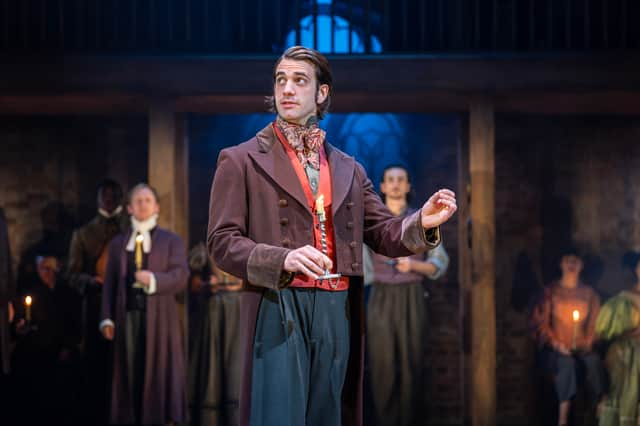
Granted, it helps if you have a guide as preternaturally astute as George Eliot. And the first success of this production, spread over two parts, is the placing of Eliot herself at the heart of things. She is played with sharp charm by Amanda Root, sometimes narrating, sometimes conversing with her characters, even arguing with them, sometimes just a benign presence witnessing her creation unfold. She is also good at getting laughs, and laughs come early and often.
The main character is Middlemarch itself. You never see it as such, but you see in exquisite detail the intricacy of its workings, the way that slight actions have consequences that ripple across the town, the way that no life is truly independent of any other. This play has 36 human characters and each makes a difference. At its heart though is Dorothea Brooke, who begins as earnest and idealistic to an almost comical extent and ends battered by life but still noble at heart. Like many of the people here, Dorothea is always unfinished, her character forever misshapen, and this is made vivid in Nia Towle’s depiction of her.
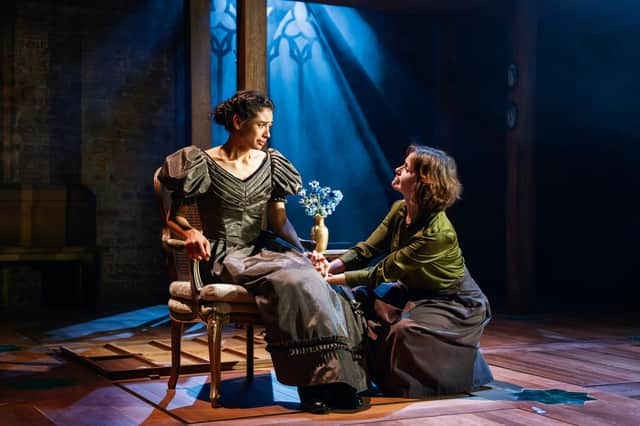
Almost every character is likeable in some respects and infuriating in others. Rosamond Vincy is a winning young woman, full of life, but shallow and self-centred; Emma McDonald, who plays her, hits every note. The cosmopolitan young doctor Tertius Lydgate (Andrew Richardson) arrives in Middlemarch full of new ideas and modern treatments, and sees himself as a force for progress; but he makes for a poor husband, and his pride is his downfall. Fred Vincy shares some qualities with his sister Rosamond, although Ebenezer Gyau catches the character’s winsome daftness only fleetingly.
His performance is one of a few things that do not quite work here. John Hodgkinson mugs rather as the pious Methodist banker Bulstrode; his performance is part of the production’s general tendency to lapse into broad comedy, which saps tension and emotion. But putting Middlemarch on stage is as hard. It is also worthwhile: it is a reminder that we are all simultaneously less important and more important than we can know. However we experience Middlemarch, that is a lesson worth learning.