
The Boy Who Harnessed the Wind review: Power of the practical conjures musical magic on Stratford stage
Peter Ormerod reviews The Boy Who Harnessed the Wind, by Richy Hughes and Tim Sutton, based on the book by William Kamkwamba and Bryan Mealer, presented by the RSC at the Swan Theatre, Stratford
Well, this is different. And not for the reasons one might expect.
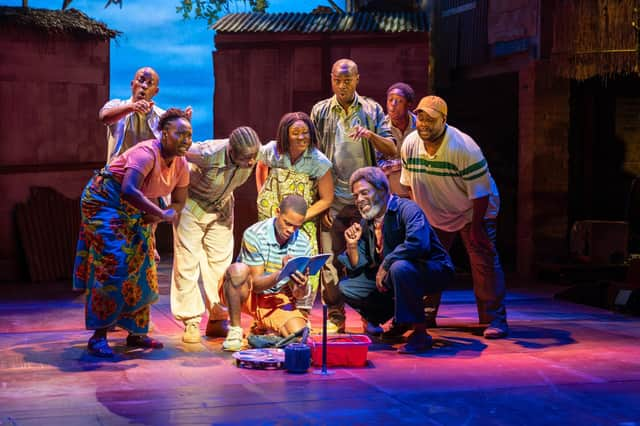

This is surely the first time that events in the East African nation of Malawi have been the focus of attention at the RSC, and the first time that the country’s culture has been so vividly represented in Stratford. But what really sets this new musical apart is its mingling of things like love and hope – the usual stuff of musical theatre – with the workaday and the practical. It makes for an unusual watch, but it is never less than intriguing.
The Boy Who Harnessed the Wind tells the true story of William Kamkwamba, who was born in 1987. Around 2001, his community faced appalling hardship and heartbreak when a famine led to widespread impoverishment and starvation. But William’s inquisitiveness, ingenuity and imagination brought about a technological solution that was equal parts miraculous and mechanical.
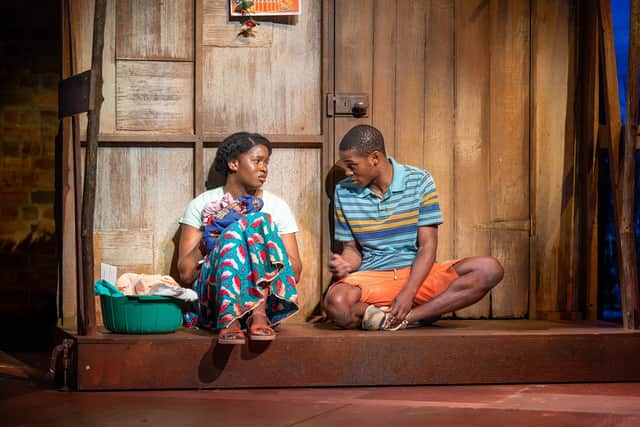
That unusual combination drives this musical and gives it a unique texture. It does not stint on the poetic or intangible: “Why show a child the sky, then tell him not to fly?”, goes one line. But it is all grounded in the junkyard, in wires and wheels and batteries and pipes. William, portrayed here as modest and studious in contrast to his rather lairy acquaintances, laments the fact that so many people show such little interest in how things work. The lesson here is that it’s not enough to be vaguely ‘inspiring’ – sometimes you actually have to do stuff and make things. But doing stuff and making things can be inspirational too, and requires its own kind of dreaming.
One scene encapsulates all of this particularly well. William's heart and mind are set on building a windmill that would generate electricity and irrigate the parched land. But his father insists that he must give up all of this and learn how to plough. Such scenes are typical in theatre: a child’s dreams are threatened by the reality of the adult world. But here, William’s dream is just as hard-headed as his father’s.
The story is told through song, much of is which is steeped in Malawi’s musical traditions: deep rhythms, women’s choirs, work songs. The programme describes the tendency for Malawian music to be “long-form and spontaneous, rather than driving towards a predetermined endpoint as is typical of Western musical theatre”. This again sets the show apart: the music may sometimes lack sharp lines and a clear sense of direction, but it it overflows with spirit. The staging shifts effectively from colourful and ebullient to parched and harrowing. Death stalks in the shape of a hyena.
It is something of an ensemble piece, and there are no weak links, but Alistair Nwachukwu’s role as William requires great subtlety and vocal skill, and he is more than up to the task. Tsemaye Bob-Egbe as William’s sister Annie sings with astonishingly penetrative force. The music is played with all the required verve, and Lynette Linton's direction is bold and cohesive, although there can be a shapelessness at times.
At the end, the audience is not cheering a kiss or a rise to stardom, but the completion of a machine. Here is hope, earthed and grounded. How different. How refreshing.
Until March 28. Visit rsc.org.uk or call 01789 331111 to book.