
'Mediocrity is the enemy!' Trevor Horn talks about his lifetime of hits as he brings live show to Leamington
The record producer behind some of pop’s biggest songs talks to Peter Ormerod ahead of Assembly show
You heard him on the wireless back in ‘79. And then you heard him again, and again, and again, and you still do.
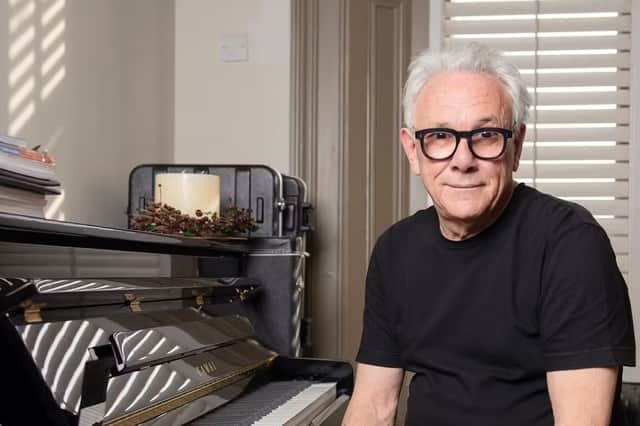

And soon you’ll be able to hear him on the stage, too. Because Trevor Horn - the record producer who has shaped the sound of pop arguably more than any other living Englishman - is bringing his live show to Leamington. It’s safe to say the town has never welcomed a hitmaker quite like him.
His influence is impossible to measure, but we can start by doing some counting. There are the 79 UK top 40 singles, of which 24 made the top 10 and seven reached number one. Purely in terms of commercial success, he pretty much tops the chart.
And if the sheer numbers don’t convince, just consider the breadth of artists whose songs he crafted: ABC, Spandau Ballet, Yes, Frankie Goes to Hollywood, Paul McCartney, Malcolm McLaren, Art of Noise, Grace Jones, Pet Shop Boys, Simple Minds, Seal, Rod Stewart, Marc Almond, Tina Turner, Cher, LeAnn Rimes, t.A.T.u., Robbie Williams, and countless more besides. Life would just sound different without him. Then there’s his role as a visionary, pioneering the use of the digital kit that revolutionised the way records were made.
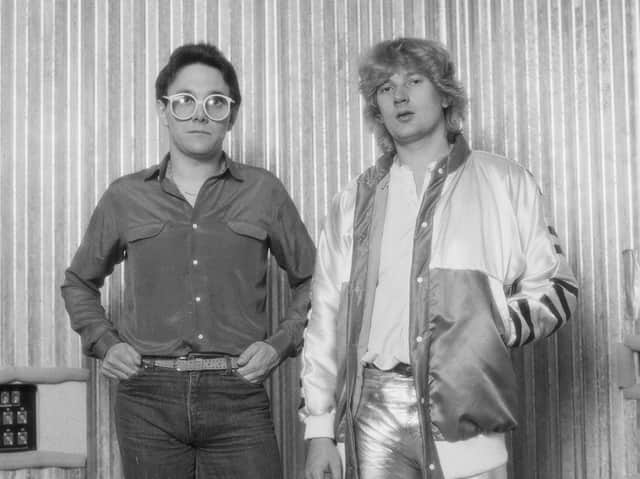
But he’s never lost sight of the humans behind them. Which brings us back to his first hit, Video Killed the Radio Star. He sang that one with his band, The Buggles; it topped the charts in 1979, and so penetrating was its insight and so catchy was its chorus that it was chosen as the first video to be played by MTV. Speaking to him today, he still seems to embody that song’s sense of yearning for a more organic age while embracing the possibilities of the newest technology.
Most importantly for now, however, there’s the live show. We might feel we already know the songs inside out, but we probably won’t have heard them quite like this.
“Well, they sound different,” says Horn. “Live is one thing and a record's a different thing. To get a record to have the kind of energy that you want it to have, that's quite hard work. Live, you can get away with murder.
“You’re generally more aggressive live anyway, up to a point. It's just a different thing - the studio is very considered, whereas live is a train crash, you know? It's about how much of it you can play without anybody making a mistake. When you make a really good record, when it sells really well and you hear it a lot on the radio, that’s your applause. Live, you get the applause straight away. Every live performance is unique.”

Horn found himself at the centre of a bona fide cultural phenomenon in the 1980s. He was instrumental in the success of Frankie Goes to Hollywood, who blended subversive politics and conceptual art with Scouse swagger and some of the biggest hooks of the decade. Beginning in October 1983, they had three consecutive number ones: Relax, Two Tribes and The Power of Love. While so much else from the ‘80s now sounds tinny and clattery, those Frankie songs still sound astonishing. Why?
“We weren’t trying to be fashionable - that’s the first thing,” he says. “You should never try and sound fashionable because whatever's in fashion now, will be out of fashion by the time you finish whatever you're working on. So you have to just completely ignore fashion. And we didn't cut any corners, you know. We didn't do any shortcuts. We really worked hard. I had a great engineer, Steve Lipson, and I had a brilliant keyboard player, Andy Richards. I was working with some really good people. We had all the best equipment as well, and knew how to use it.”
There’s a theme here, something to do with looking back to go forward. And it turns out those huge hits of the ‘80s were inspired by music that was pretty unfashionable by then, too.
“The thing I used to enjoy the most in the 70s, I was a big fan of Yes,” he says. “I loved that sort of prog thing where you would have one song that was 20 minutes long. Once you've got to know it, it would be so much more of a satisfying experience. It would develop and it would have climactic sections and quiet sections. I've always enjoyed that.
“You don't have to make things simple to have hits - you just have to have something that has really good content in it. Sometimes it takes people a little bit of time to hear a song enough times to get into it. Nowadays, there's a terrible tendency for a record to shoot its lot basically in the first 45 seconds - because of the way people listen, they tend to just listen to little bits of things these days. I was always trying to keep the record interesting, right the way to the very end. I never let up. Sometimes that can be irritating, but mainly it was good, and people would understand that it was worth listening to the record, because it was like going on a ride.”
For Horn, the ride went on, and the hits kept coming. Among them were Left to My Own Devices by Pet Shop Boys, Belfast Child by Simple Minds, Crazy, Killer and Kiss from a Rose by Seal, Rhythm of My Heart by Rod Stewart, Can't Fight the Moonlight by LeAnn Rimes, All the Things She Said by t.A.T.u. and Bodies by Robbie Williams. Horn has won a Grammy and numerous Brit Awards, and has been made CBE for services to the music industry and awarded an Ivor Novello Award for Outstanding Contribution to British Music.
And a lifetime immersed in music and technology has left him with strong opinions about both, especially at a time when so much music is made on computers in bedrooms, with no studio or producer involved. “To compare a modern record to a record from the ‘60s or ‘70s is like comparing pre-made food to a proper kitchen with a chef,” he says. “In a proper kitchen you make the sauce yourself, you blend things. A modern record is the equivalent of ‘just add water’. You don't need the same kind of a place as a studio because you've got pre-recorded drums, pre-recorded everything. And all you have to do is arrange it.
“Back in the day, if you went into a studio without a proper producer or engineer, you would come up with something very average that would sound rubbish. Nowadays you'll just come up with something mediocre. Mediocrity is the enemy. It sounds fine because it's all pre-recorded bits. But whether it'll entertain people or grab people is an entirely different thing.”
So some old-fashioned qualities - musicianship, showmanship, craft - will be to the fore over the coming months during Horn’s tour. Then what?
“I'm thinking of doing some sample-based instrumental music.”
Traditional values, technological savvy. Trevor Horn may have changed music, but music evidently hasn’t changed him.
Trevor Horn & His Band play at the Assembly on December 3. Visit assemblyleamington.com to book.