
Rugby home care company helps spread awareness of early dementia symptoms

A Rugby home care company is helping people learn about dementia.
Home Instead Rugby is giving out 1,000 Alzheimer’s Society’s dementia checklists to help families seek an early diagnosis and receive support before it progresses further.
Members of the community are being encouraged to join in with boosting awareness of the condition.
The Alzheimer’s Society’s checklist lists typical dementia symptoms. People with dementia, or their loved ones, can fill it in and show it to a GP or healthcare professional.
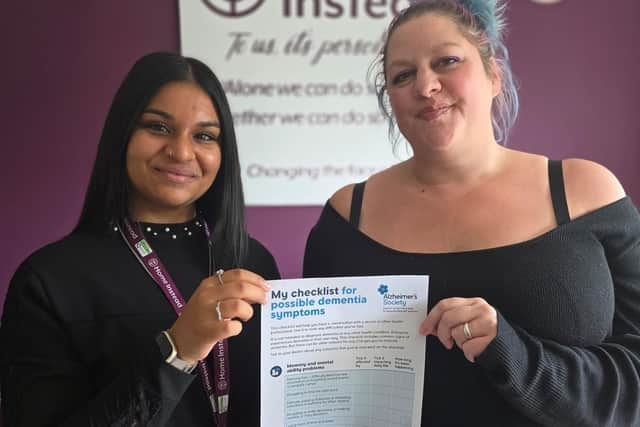

It helps show the severity of the condition and increases the chances of receiving a diagnosis, enabling you to seek further help. Not only that, it removes the need for family members to discuss their loved ones symptoms in front of them, preventing conflict and upset.
As a company that supports older people with dementia living at home, Home Instead sees the impact that the condition has on families. The company has care professionals who are specially trained to deliver dementia care and decided that World Alzheimer’s Month was the best time to raise awareness.
Sarah Slater, owner of Home Instead Rugby, said: “Some people have difficulty receiving a dementia diagnosis, for a number of reasons. Perhaps the GP thinks that the person is simply showing signs of old age, rather than dementia. And maybe their loved one doesn’t think they have developed the condition.
"The dementia checklist is such a useful tool to demonstrate the common signs your loved one is showing, from asking the same question repeatedly to struggling to find the right word.
“Getting an early diagnosis is important, and that’s the message we’re spreading when out in the community to mark World Alzheimer’s Month. It might be that your loved one can get treatment to prevent it from progressing further. Or they might benefit from joining a local support group. Find out at an early stage stands you in great stead to face the challenges of dementia together.”
Some dementia symptoms include memory loss; difficulty concentrating, planning or organising; problems with language and communication;
misunderstanding what is being seen; being confused about time or place and mood changes or difficulty controlling emotions – for example, becoming unusually anxious, irritable, sad or frightened, losing interest in things and personality changes.