
‘Trade-offs’ required to stem ‘unsustainable’ overspends at Warwickshire County Council
Financial forecasts reported to the cabinet – the panel of Reform UK councillors in charge of major service areas – last week showed that the council’s projected unmitigated overspend aside from the Dedicated Schools Grants (DSG) deficits is £18.554 million.
Warwickshire County Council is bracing itself for budgetary “trade-offs” as care costs continue to widen a financial back hole.
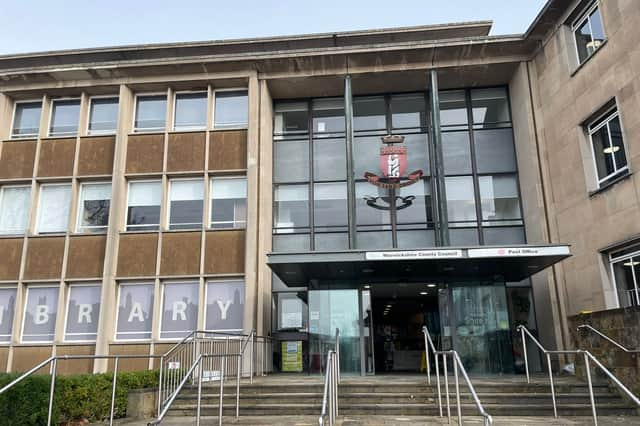

Financial forecasts reported to the cabinet – the panel of Reform UK councillors in charge of major service areas – last week showed that the council’s projected unmitigated overspend aside from the Dedicated Schools Grants (DSG) deficits is £18.554 million.
Movement to and from reserves – pots of cash to plug gaps or fund specific things – brings that down to £11.199 million, all of which is set to be covered by a short-term reserve.
Much has been made of how that eats into more than half of that reserve and while it is a pot that has fluctuated in recent years, the primary concern is how the surge in money needed for statutory services can managed in the bigger picture.
How things look now
Councils budgets are made up of multiple moving parts with underspends, savings and extra government grants meaning the council spends less than budgeted for in some areas while unpredictable issues, inflation or rising demand can provide strains on resources.
Things have been tight at Shire Hall for a number of years with social care, education and home-to-school transport frequently cited as spiralling demand-led pressures.
The transport element is said to be steadily coming under control and as things stand, the council is on target to deliver 97 per cent – £26.663 million – of the £27.579m of the savings it budgeted to make in 2026-27.
That is a notable achievement against the 69 per cent of a smaller amount achieved in 2025-26 (£14.7m saved against a target of £21.8m) and the 61 per cent of a smaller amount still under the Conservatives in 2024-25 (£9.5m against a target of £16.2m).
However, at the end of quarter two last year the projected unmitigated overspend without DSG was £13.754 million – 3.3 per cent of the budget.
This year’s projection of £18.554 million is 4.2 per cent of the budget.
The biggest driver is children’s care placements – the number of weeks the council expects to have to fund has gone up by more than 10 per cent with rates going up by an average of more than five per cent, adding an extra £9.3 million to the bill for these placements alone.
The children and families directorate anticipates an unmitigated overspend of £14.5 million against budget as things stand.
A three per cent rise in the volume of older people requiring residential care places is driving almost half of the projected £3.7 million overspend on older people’s services.
The report authored by an officer – council employee – cites national issues that “urgently require effective national policy solutions in addition to the significant local mitigation work taking place”.
Finance lead’s view
Deputy leader and finance lead Councillor James Crocker (Reform UK, Arden) told the cabinet that “key financial pressures remain concentrated in a small number of demand-led areas”.
He added that they were reflective of “national issues as well as local service pressures” that would need to be fresh in the minds of councillors when setting the budget in February 2027 for the financial year beginning in April 2027.
He also noted that this year's savings shortfall related “entirely to children and families”.Conservative group leader Councillor Adrian Warwick (Fosse) said it was “not a sustainable picture at all” and asked for further comment on what could be done.
“There is a fundamental issue here,” said Cllr Crocker.“
“We can only control what we can control and the vast majority of controllable elements are being managed extremely well.
“It is the demand-led issues, delivered by statute from a national level, that are concerning.
“I don’t think anyone can dispute that in any way.
“In terms of unit cost, we are absolutely in line with where we would expect to be, although I think there is an issue for the taxpayer – and I am always a person to champion the taxpayer as much as possible – in that we are obliged as a council to support our residents where obliged, but we are not obliged to support them at any cost.
“I am very conscious of that.”
He added: “There is a lot we can do in terms of further reprofiling, looking at the pipeline of capital expenditure.
“Admittedly, as we head towards budget we are going to have to face some challenges – and I put that very mildly.
“Deputy leader of the Liberal Democrat group Councillor George Cowcher (Wellesbourne) asked what other mitigations were being considered.
Cllr Crocker listed the Value for Money programme, “constant conversations” about the annual reset of the council’s five-year financial plan and “the reprofiling of the capital programme”.
“We are looking at this even closer than maybe we were before,” he added.