
D-Day: The stories of Warwickshire soldiers and their roles in the D-Day landings
With the 80th anniversary of D-Day today (June 6) we have worked with Oxford University’s Their Finest Hour, a Second World War digital archive project and The Fusiliers Museum in Warwick to share some of the Warwickshire soldiers’ stories of the landings in Normandy on June 6 1944.
‘Their Finest Hour’ project officially launches on Thursday (June 6) and contains a range of stories and objects that capture both the extraordinary and everyday lives of those who experienced the war, including letters and memorabilia.
The project team worked with hundreds of volunteers to organise ‘Digital Collection Days’, to share war-related stories and mementos and have them recorded and digitised by volunteers.
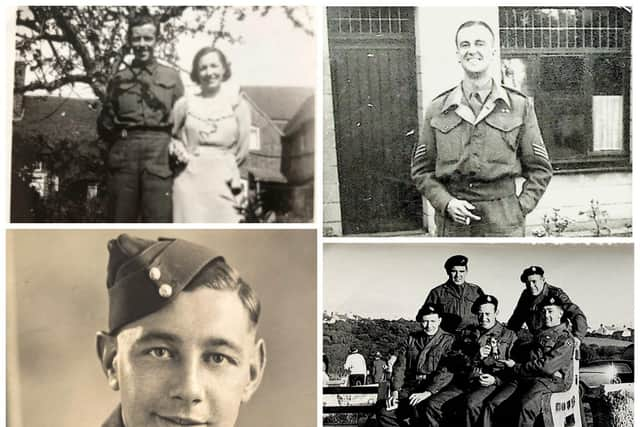

The following soldiers’ stories shared by ‘Their Finest Hour’ project were collected at collection events in Leamington
James John Cogan Warren
James John Cogan Warren was born in 1916.
He joined the army but during basic training, he got fed up with marching so when the commander asked if anyone had experience of administration James volunteered, even though he didn't actually have any. He became a Quartermaster Sergeant in the Royal Army Service Corps.
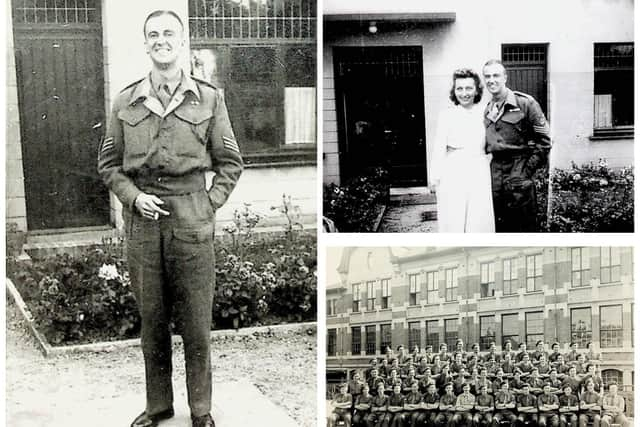
He went to Libya and Egypt with Montgomery, and after returning to the UK he went to Normandy on D-Day +5 at Gold Beach, and then on into Belgium.
When they pitched tents in the grounds of a university a pretty young student named Suzanne came to ask what the latest news was, and a relationship began. They later married and Suzanne came to live in the UK.
Bill Harwood
During the D-Day landings in Normandy, somehow Bill Harwood was able to find and purchase a French-made doll for his three-year-old daughter.
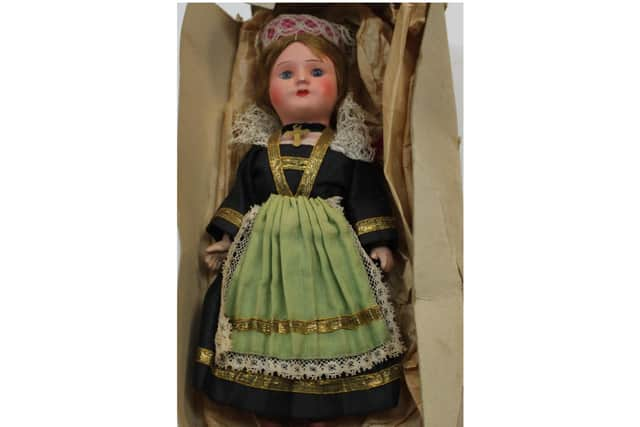
He tucked the doll into his tunic, went about his duties in France and returned to England.
Harold Brown
Harold Brown joined the Royal Army Service Corps as an ambulance driver in April 1941.
On June 6 1944, aged 24, he drove his ambulance off the troop carrier and underwater before driving up the beach during the D-Day landings.
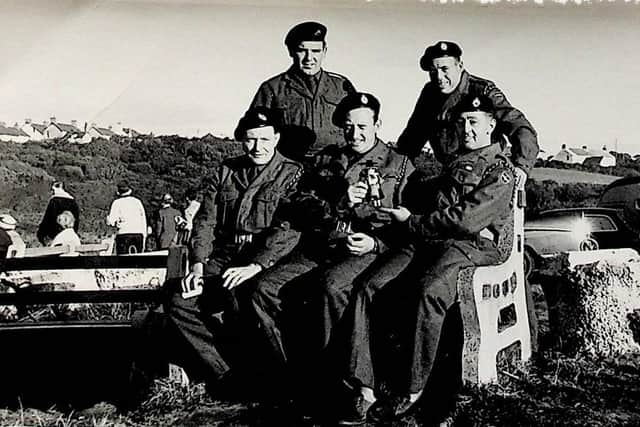
Subsequently, his unit, the VIII Corps, fought their way up through Holland where he took part in the liberation of Eindhoven in September 1944.
They then went on to Germany where Harold was on duty during the liberation of prisoners from the Belsen Concentration Camp. On VE Day he was stationed west of Lubeck in Germany and recorded in his diary "VE Day, war over. Had a letter from E".
Margaret Fitchett and Michael (Mick) Murphy
Margaret Fitchett was a young woman living in Southam in Warwickshire.
During the war she drove an ambulance and also worked as a VAD nurse in addition to an office job in which she was covering the roles of two men who had been called up.
When she and a friend went to buy tickets for a dance at the Sergeant's Mess a young Irish Sergeant called Michael Murphy said that he would only sell her a ticket if she promised to dance with him.
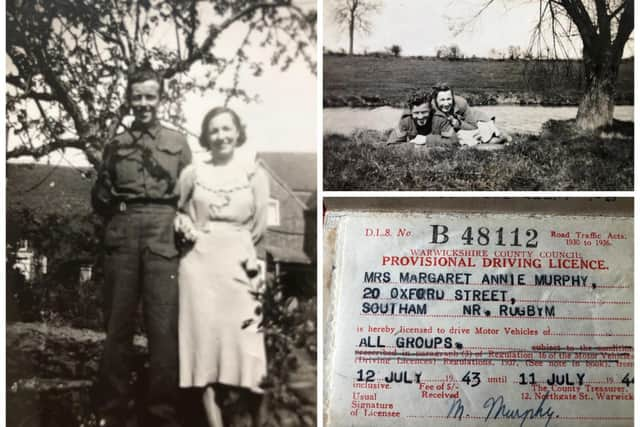
She kept he promise, and it was the start of a true romance. They were married in 1942.
Michael (Mick) Murphy had come to England from his home in Ireland for work in the 1930s.
He joined the Pioneer Corps in 1940 and was soon promoted to Sergeant. Before he was stationed near Southam his company had been in France and evacuated from Dunkirk.
He went with the Army on D-Day. Margaret was very anxious as he was only allowed to send pre-printed postcards after they had landed to let her know he was alive. He was with the Second Army in Northern Europe until the end of the War.
The following story was shared by the Fusiliers Museum in Warwick, which is one of many stories about soldiers and D Day in its ‘Ashore We Stumbled – The Royal Warwickshire Regiment and D-Day’ exhibition
James Arch
Private James Arch was a member of the Signal section in the Second Battalion of the Royal Warwickshire Regiment.
The museum has a letter that James wrote to his sister Olive just six weeks before D-Day saying how much he had enjoyed his last leave and was hoping for another if he is lucky.
James landed on Sword Beach on June 6 and would have probably been weighted down with a radio pack (called a number 18 set) on his back and headphones on his ears. This would have made him an even more vulnerable target.
The museum team also has an account of two unnamed signallers being killed by a glider landing on top of them at the beach – because they were wearing their headphones they did not hear it coming.
James was seriously injured on D- Day and died of his wounds on August 2 back in Britain. He is listed in the roll of honour in the exhibition.