
VJ Day: Leamington man shares his father's incredible POW survival story
In the run up to the VJ Day 80th anniversary commemorations, a Leamington man has shared his father’s incredible story of surviving being a prisoner of war to the Japanese during the Second World War.
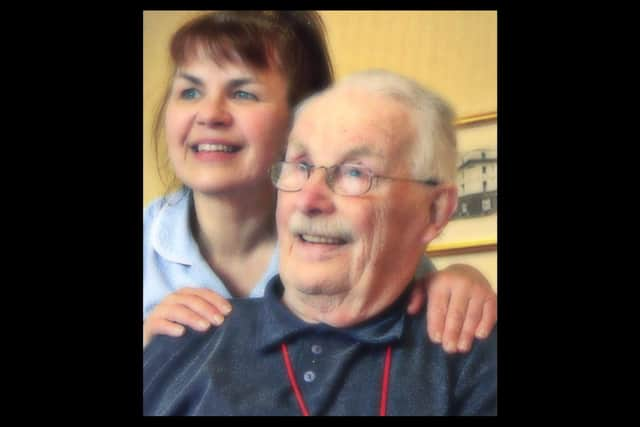
Peter Bowen’s father, 2nd Lt. John Bowen, of the Northumberland Fusiliers, was a Japanese prisoner of war (POW) for four years.
Having boarded the transport ship Warwick Castle and set off from Liverpool in October 1941 at the age of 28, John was among the 70,000 troops based in Singapore when the Allied forces surrendered on to the Japanese on February 15 1942.
In a letter to his wife Mary dated August 25 1945 – one of many he sent home to his family while he was away without knowing if they had received them – John described the surrender and his treatment at the hands of his captors.

He said: “The Japanese had only a small advance party and [we] were astonished by the numbers [of allied troops] laying down arms and thought them cowards.
"I had a lucky escape when suddenly coming face to face with three Japanese soldiers – one aiming a gun at my head.
"Fortunately, the bullet flew off the brim of my tin helmet - the only incident in some 12 days of fighting prior to surrender.”
John was made to work at the Singapore docks for six months and was then sent off to Thailand with thousands of others to build the notorious Burma-Siam Railway.
There he lost many of his comrades and friends.
John said: “Malnutrition, beriberi and cholera claimed many lives as exhausted, starving, prisoners worked 16 hours a day cutting their way through dense jungle with basic tools, while [being] bullied, beaten and harassed by our cruel North Korean guards.
"Some of the younger men could see no end to the life-sapping conditions but I, and the older soldiers, were stoical believing that at some stage the war would come to an end.”
John and his fellow POWs’ daily food ration was just three bowls of dry rice and a watery soup.
They were all weak and starving, killing snakes, cats and dogs to ‘put in the pot’.
Camps were make-shift, monsoon weather conditions sapped men’s spirits and at night the prisoners were overrun by fleas and rats.
Many died due to a lack of medicines, food and from exhaustion.
As a practicing Catholic with no clerics around, John had the job of a padre giving the last rites to prisoners and supervising the cremation of their bodies.
John said: “I’m told 60,000 prisoners worked on the ‘Death Railway’, which was 200 miles long.
"They laid 30,000 sleepers, one for every prisoner who died and half of the workforce.
"The worst memory for me was losing a man for every day of the month in March.
“But Survival for me was all important for family - a baby daughter I had barely seen and who was now four years old.
"I have little left. Gone are my cigarette case, pictures, wallet, and fountain pen.
I still have a Midland Bank cheque book and two cheques signed for food and medicine for other prisoners.
"I have lived while a captive wearing just one pair of shorts and two shirts.”
In May 1944, after the ordeal of working on the railway, John volunteered to be taken to Japan as a prisoner.
He said he wanted to see what motivated the Japanese.
But he was lucky to survive the long sea journey there as a prisoners were battened down in the hold in the searing heat in vessels which were barely seaworthy,
He said: “Little more than cargo barges - the ragged flotilla was a target.
"I am lucky as ours was one of the few survivors.
"Four ships were torpedoed - sunk by American submarines with the commanders not realising they were killing prisoners, many of whom were Americans.”
By June 1944, John was in a Japanese camp called Fukuoka.
He said, of the 20 POW camps he experienced, this was the worst.
He said: “The Japanese were brutal and intolerant.
"Men died from starvation and hard work in coal and zinc mines.
“Some were deliberately killed.
"I left in April [1945] after ten months of real misery.
"I don’t know how I got through it alive.”
He was moved to a camp in Mukden, Manchuria.
Of the 1,780 men at the camp, 280 were British.
They were still on a starvation diet and he had to sleep on the floor with 50 other officers.
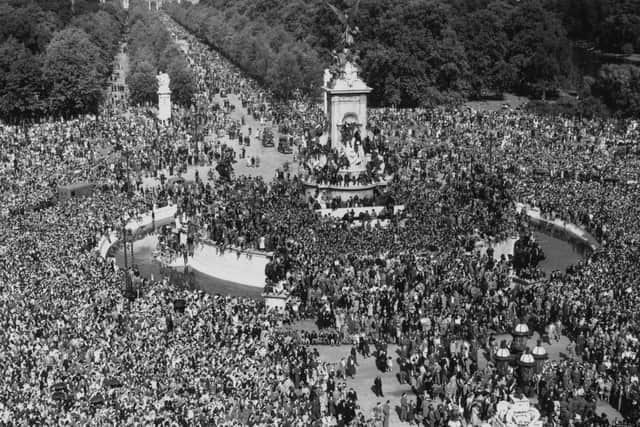
Then, VJ Day on August 15 1945 came.
In his letter to Mary, which he wrote three days after, John said: “American paratroopers hit the camp.
"I am free.
"Now planes drop parcels of food, clothes and cigarettes regularly,
"I have more than I could have ever imagined.
"Some of the generals are leaving today and I hope to be away in time for Christmas.
"The idea of being home again seems unbelievable.
"I long to get away from crowds of people and look forward to coming home to you, the family, and peace and quiet.
“All my love to you all.”
Before Mary received his letter in 1945, John was listed as missing presumed dead.
He later gave evidence after the war for one of his captors - who would otherwise have been shot.
He lived in Leamington, worked in Warwick for Turriff Construction, was Grand President of the Catenian Association and drove a Japanese car.
He died aged 93 in September 2006 having lived his final days at Galanos House, the care home for the armed forces community, in Southam.