
Harbury tree surgeon warns felling the tree can make subsidence worse
A Harbury tree surgeon is urging Warwickshire homeowners who have found cracks in their walls after this summer's record heat not to rush into felling nearby trees, because on clay soil it can make the damage worse.
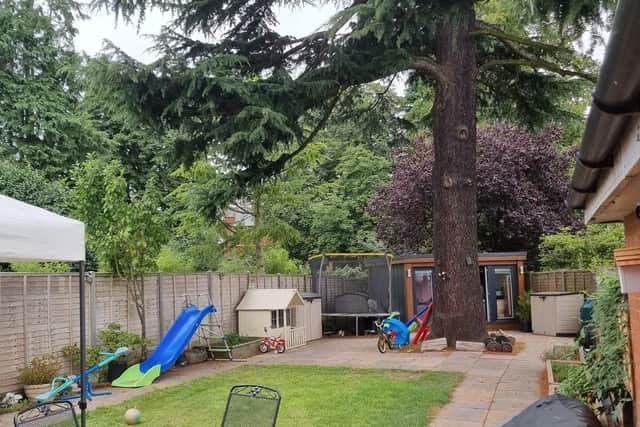

Summer 2026 was the hottest on record for the UK, July was England's driest July since records began in 1836, and the West Midlands was in drought by August. The Association of British Insurers says the average subsidence claim has reached a record £20,000, and one insurer has reported August claims up nearly 140% on last year. Cracks from a dry summer usually show between September and November.
Much of Warwickshire, including Leamington, Warwick, Kenilworth and Rugby, sits on clay or mudstone that shrinks as it dries, and older houses on shallow foundations are the kind most at risk.
Connor Scullion, who runs Scullion Tree Care in Harbury, said: "When a crack appears next to a big tree, the first instinct is often to have the tree felled. On clay that can be the worst thing you do. If you take away a big tree that was there before the house, the ground can swell back over years and lift the foundations."
This is called heave. Where a thirsty tree has stood next to a house for decades, the clay under the foundations may never have been fully wet since the house was built. Once the tree is gone, the ground slowly takes the water back and swells.
He added: "Check the drains before you blame the tree. A leaking drain softens clay as surely as a dry summer shrinks it and roots only get into pipes that are already cracked."
Subsidence cracks tend to be diagonal and wider at the top than the bottom, usually around doors and windows and thicker than a 10p coin, while fine hairline cracks in plaster are normal in most houses. If it does turn out to be subsidence, a standard buildings policy normally covers it, usually with an excess of around £1,000.
Mr Scullion said the first call should go to the insurer: "If a crack is wider than a 10p coin, runs diagonally and you can see it inside and out, ring your insurer first. We come in later, once an engineer has given his opinion."
The thirsty trees are the risk, not the big ones. Oak causes more UK cases than any other tree, and willow, poplar, hawthorn and leylandii are also high risk, while birch, holly and hornbeam rarely cause any problems. It is also worth knowing that many mature trees in Leamington, Warwick, Kenilworth and Stratford are protected, and the council needs engineering evidence before it will allow one to be felled for subsidence.
Scullion Tree Care has published a free guide covering which trees cause subsidence, how far from a house is safe and what to do first: https://sculliontreecare.co.uk/trees-and-subsidence-warwickshire/