
Warwick software developer wins share of £9m to create better batteries for e-scooters and bikes
A Warwick software developer has won a share of £9 million in government funding to make smarter batteries for applications such as e-scooters and bikes at a time when high oil prices push more people and industries towards battery power.
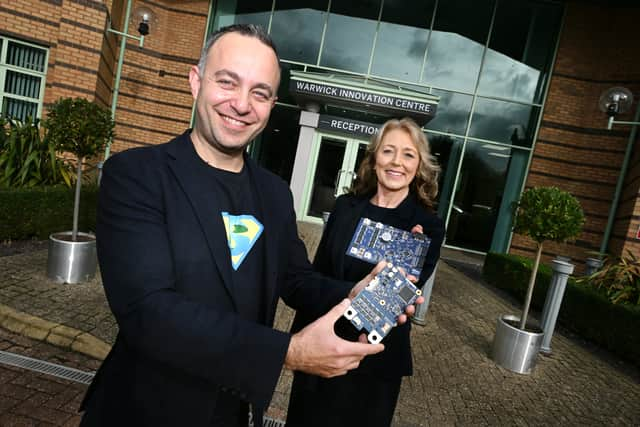

Eatron Technologies, based at the Warwick Innovation Centre, part of the University of Warwick Science Park, is leading one of ten projects backed by the Government’s DRIVE35 Demonstrate competition.
The 12-month project, known as ZENBMS, will see Eatron develop a 48-volt battery management system (BMS) for smaller electric vehicles and machines, including two-wheelers, off-highway equipment, drones and robots.
Microchip manufacturer Infineon will provide the chipset for the system, while WMG at the University of Warwick will lead its safety analysis.
Eatron’s relationship with WMG dates back to 2018, the year the company moved into the Warwick Innovation Centre as a start-up.
Dr Umut Genc, CEO of Eatron Technologies, said: “Winning DRIVE35 funding will help us develop an effective BMS for smaller batteries. E-scooters and e-bikes are now part of everyday life, and they need batteries that are safe and built to last.
“Being part of the Science Park gave us a route into the University’s expertise, and our work with WMG has grown from there. Their research capabilities will enable us to refine the BMS before embedding it into chips used in 48V batteries.”
The funding caps a strong year for Eatron. Its AI software, which can be embedded directly into batteries to prolong their life and improve performance, is now being used in the energy sector to make sure large batteries that support the grid at times of high demand run as efficiently as possible.
Eatron has also broken into the Japanese market. Since opening an office in Tokyo in 2025, it has secured several contracts with major manufacturers in the country’s automotive and energy sectors.
Umut added: “With oil prices staying stubbornly high due to geopolitical tensions, more and more people and industries are turning to batteries, whether that’s in EVs, e-bikes or the batteries that support the grid. Every extra year a battery lasts brings down the cost of moving away from petrol and diesel.
“Our AI software does not need giant data centres to work. It can be built into a battery’s on-board management system or run in the cloud, and because our AI models are pre-trained, it can still manage a battery’s performance even if a customer changes supplier.
“We are really pleased with our growth in Japan and other markets in Asia, and we are optimistic about making an impact in the US in the near future.”
While Eatron is focusing on global growth this year, the company hopes continued expansion will allow it to recruit more staff at the Warwick Innovation Centre during 2027.
Jane Talbot, Centre Manager at Warwick Innovation Centre, added: “It is amazing to see how far Eatron has come since Umut and the team based themselves here as a tiny start-up in 2018.
“Their success with DRIVE35 shows what can happen when a business makes the most of the Science Park’s links with the University. Its relationship with WMG has helped it win funding to develop technology that could make electric transport cheaper and safer.
“We want every business here to have the same opportunity. We regularly introduce tenants to academics and research teams at the University, and help them find the funding and support that can take their ideas further.
“We are really proud of what Eatron has achieved, and we will be ready to help again as they look to grow their UK team in 2027.”
Ian Constance, Chief Executive at the Advanced Propulsion Centre UK, said: “This project is one of many demonstrating the depth of innovation and engineering excellence that exists across the UK automotive sector. Through DRIVE35, we are supporting businesses to move promising technologies beyond the research phase and towards commercial deployment and manufacturing at scale.
“Real-world demonstrations are where innovation proves its value. Eatron’s project will help generate the evidence and confidence needed to accelerate commercial adoption, helping promising technologies move from prototype to production.”