
Looking Back: Warwick Court House marks 300 years in the town
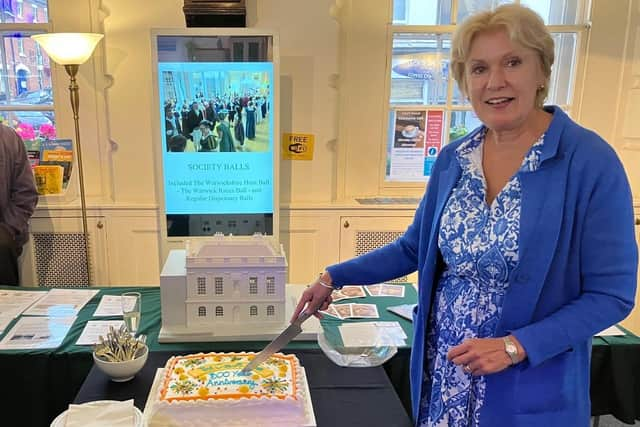
A display celebrating 300 years of the Old Court House – Warwick’s Town Hall – has been officially opened by the Mayor and will be available to view for the next two months.
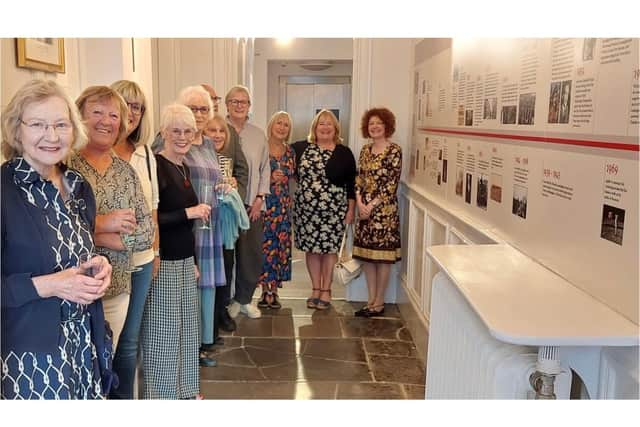
It includes a permanent installation of a timeline showing the story of the Court House over the past 300 years and its importance in Warwick’s history.
Prepared by the Unlocking Warwick volunteers, the timeline also shows some significant world events during the period.
For example the Court House had been standing at Warwick’s central crossroads for fifty years before the American Declaration of Independence, and a hundred a sixty years before the first motor car.
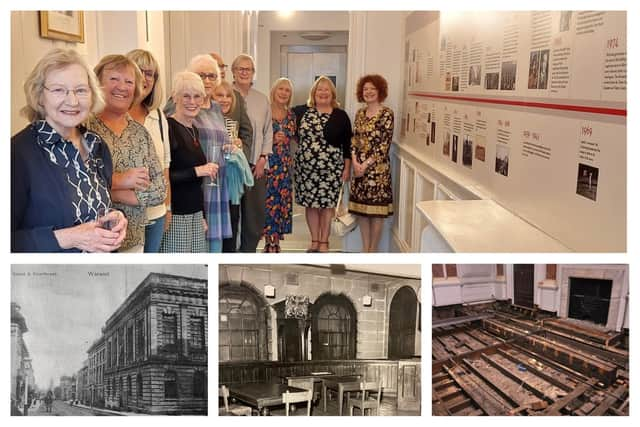

Unveiling the timeline and opening the exhibition on September 2, the Mayor of Warwick, Cllr Jackie Darcy, said: “The 300th anniversary is certainly a moment to celebrate this impressive building and to reflect on what Warwick looked like in 1725 when Francis Smith began construction of the Court House.
"The population of the town then was about 3,000; now it is 37,000 and growing.
"Class divisions were very stark back then, illustrated by the purpose and function of the building.
"It was very much a story of ‘upstairs/downstairs’. One function was entertainment, largely for the affluent of Warwick and its surrounding areas.
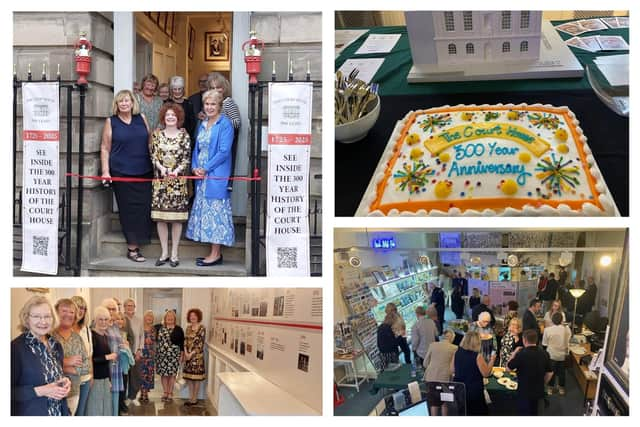
"Sumptuous balls and society events were held in the ballroom upstairs.
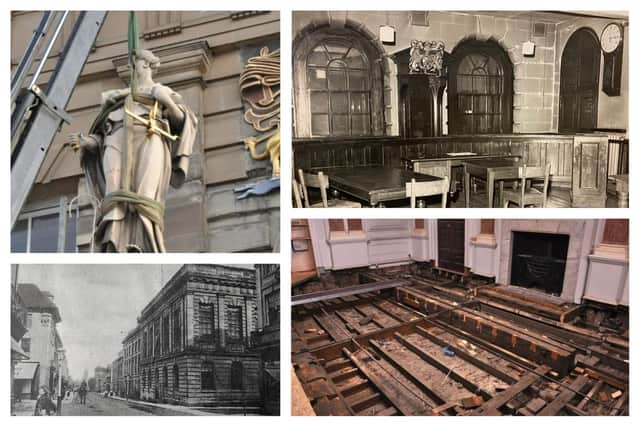
"Whereas downstairs magistrates dealt with crimes that were mostly associated with poverty, such as vagrancy, petty theft and drunkenness, with felons sent to the House of Correction or threatened with deportation.”
The Mayor thanked designer Dianne Loftus who had formatted the timeline, the Visitor Information Centre team who had put together the display boards, and the researchers from Unlocking Warwick.
She said: “This group of volunteers have worked tirelessly to make this project a reality, and have showcased the Court House with a variety of community events for the past 11 years since the building’s major refurbishment.”
On the final day of the Warwick Words History Festival on October 5, the Court House volunteers, Unlocking Warwick, will be presenting the 300-year history of the building and its role in the story of Warwick in the ballroom, with guest appearances and a chance to see the town maces up close.
For more information go to: www.warwickwords.co.uk
The Court House Tercentenary by the Unlocking Warwick Researchers with thanks to the County Record Office
The display in the Visitor Information Centre tells of the Charter of Queen Mary in 1554 that established the Warwick Corporation and a Magistrates Court housed on the present site at the central crossroads in a former tavern.
In the Great Fire of 1694, the building was reportedly ‘badly singed’, and after new elegant houses had risen around it, in 1725 the burgesses commissioned local master-builder Francis Smith to build them an impressive new Court House and town hall.
It is now Grade-1 listed, which means it is of ‘exceptional national interest’.
The Petty Sessions
In a courtroom that is now the visitor centre, minor crimes were dealt with by a Justice of the Peace, or Magistrate, usually assisted by two other officials, but without a jury.
The JP was often the Mayor, with no legal training.
Serious cases were referred to the Assizes in Northgate Street. Records show that offences coming before the Petty Sessions were very often born out of poverty.
Vagrancy, drunkenness and begging were routinely reported in newspapers at the time.
Many of the accused could not afford to be represented by a lawyer.
The Magistrates had the power to levy fines, and send persistent offenders to prison or to the House of Correction in Barrack Street. This forced inmates to work – to punish them, but also to teach them that work is the answer to vagrancy and poverty.
Their labours also helped to fund the institution. The prisoners would be forced to wind huge treadmills for up to 10 hours a day. These mills ground corn to be sold as flour.
Drunkenness sometimes led to a few hours in the stocks, until 1863 when the stocks were withdrawn.
Warwick’s Social Centre
The Court House has a long history of hosting social activities in its grand ballroom.
These included public meetings, musical performances, ‘lantern lectures’, spelling bees for children and splendid Regency-style dances.
These included the Races Ball, the Warwickshire Hunt Ball, the high-society Ladies’ Ball and the regular Dispensary Ball that raised considerable sums for the clinic in Castle Street that helped people who could not afford to pay for a doctor.
The Dispensary closed in 1948 following the introduction of the National Health Service.
Refurbishment
Over the past 300 years, the building has needed repairs, an extension at the back, and work to create the Mayor’s Parlour and the Magistrates Court.
The last major refurbishment was between 2010 and 2014 funded largely by the Heritage Lottery Fund. The ballroom floor was found to have rotten joists and had to be replaced.
The Statue of Justice had lost her golden sword and was cracking. She is made from metal, painted to look like stone.
She was winched down and taken to a workshop in Telford for repairs. Justice is blindfolded so that she does not know if those brought before her are rich or poor.
The Court House Today
Warwick’s Court House is the home of the town council that looks after the interests of the the town.
It is also the home of the ancient Court Leet that from the 16th century kept law and order, and ensured that food sold in the market was fit for human consumption.
The Leet is one of the few in the country that still exists in a largely ceremonial role, but it also raises money for many local causes.
The Court House is as busy as it has ever been hosting private functions alongside the civic meetings, but also staging regular teas, talks and other community events.
For more information about the Court House go to: https://www.unlockingwarwick.org/the-court-house/visit-the-court-house/